
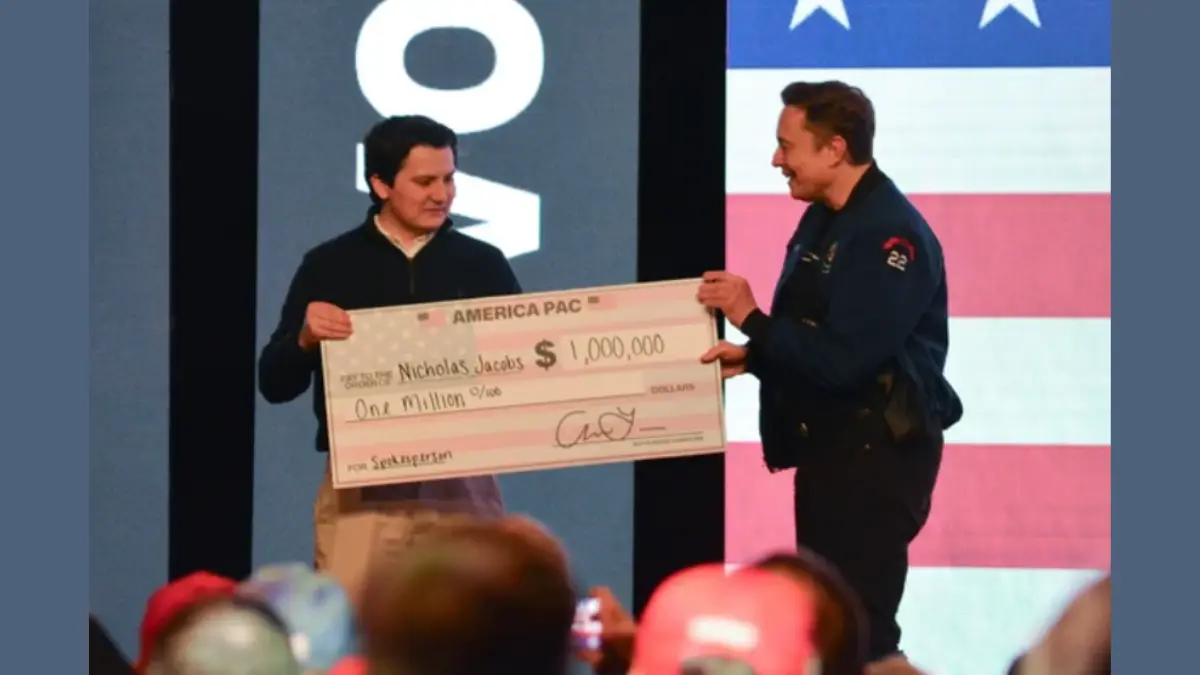
Elon Musk is facing renewed legal scrutiny after the Wisconsin Elections Commission found probable cause that his $1 million voter giveaway may have violated state election law. The decision allows the case to move forward for further legal review, though it does not represent a final ruling that any laws were broken.
The investigation centers on a promotional campaign during Wisconsin’s closely watched state Supreme Court election. Musk-backed organizers awarded $1 million checks to selected participants who signed a petition supporting constitutional rights, prompting questions about whether the giveaway amounted to an unlawful election incentive.
Questions Raised Over Cash Giveaways During Elections
Wisconsin law generally prohibits offering money or other valuable items to encourage someone to vote or influence their participation in an election. Election officials are examining whether the million-dollar payments crossed that legal line or whether they were protected as part of a broader political advocacy campaign.
Supporters of the promotion argue that the giveaway was linked to petition signing rather than voting itself. Critics, however, contend that the timing of the campaign and its connection to a major election created the appearance of an improper financial incentive.
Legal Outcome Remains Uncertain
The Elections Commission’s probable cause finding means the case can proceed through additional legal channels. State authorities will now determine whether further enforcement action, including civil penalties or criminal proceedings, is warranted.
Musk has not been found liable for any violation, and the matter could ultimately be resolved through court proceedings. His legal team and supporters continue to maintain that the campaign was protected under the First Amendment as political speech rather than an attempt to influence votes unlawfully.
Case Could Influence Future Political Campaigns
Election law experts say the Wisconsin investigation could become an important test case as political campaigns increasingly use high-profile promotions and financial incentives to attract public attention. The outcome may help clarify how existing election laws apply to modern advocacy efforts involving wealthy individuals and large-scale cash giveaways.
As the legal process continues, the case is expected to shape future discussions about campaign finance, election integrity, and the limits of political promotions in the United States.
To know more for Politics news