
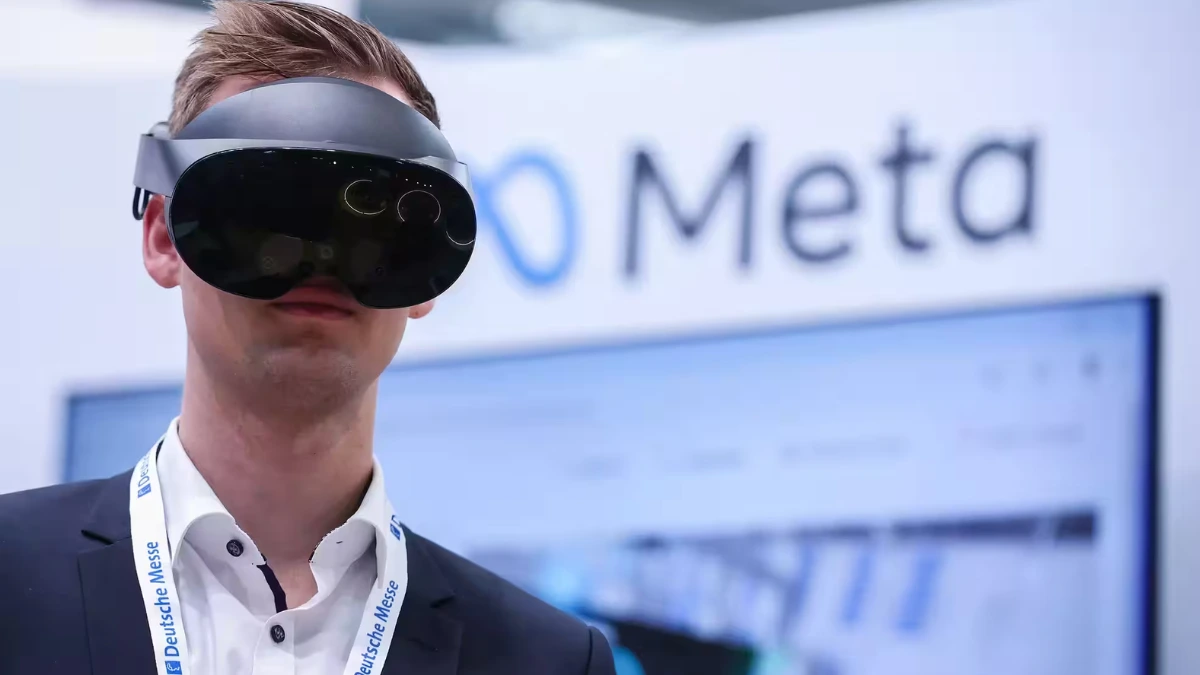
Meta vr glasses Meta is taking a new approach to virtual reality with a lightweight device designed to look more like a pair of glasses than a traditional VR headset.
The company unveiled Meta VR Glasses at its Meta Connect event on September 23, 2026. The device is priced at $1,299.99 and is scheduled to go on sale in spring 2027, according to Meta.
A Major Shift in VR Design
Unlike conventional headsets that place the processor, battery and cooling hardware directly on the user’s head, Meta has moved much of the computing hardware into a separate pocket-sized device called a compute puck.
The glasses themselves weigh about 100 grams, with the external puck connected through an optical tether. Meta says the design makes the glasses roughly five times lighter than its Quest 3 headset.
The approach also gives Meta a way to reduce the bulk of the headset while retaining features associated with full virtual and mixed reality devices.
Built for Movies, Gaming and Work
Meta is positioning the new device as more than a gaming headset. The company says Meta VR Glasses can function as a personal cinema, gaming system and portable multi-screen workspace.
The glasses use micro-OLED displays with a resolution of 2,412 by 2,288 pixels per eye and support refresh rates of up to 120Hz. Meta also says the device supports Dolby Vision and Dolby Atmos.
Users can also connect the glasses to a computer and use virtual displays for work. Gaming can be controlled through hand gestures, while existing Quest controllers can be used separately for supported experiences.
An External Puck Powers the Experience
The compact computing unit is an important part of Meta’s new design. It houses the processor, battery and storage instead of placing those components inside the glasses.
According to product details reported after the announcement, the puck uses Qualcomm’s Snapdragon Reality Elite platform and includes 12GB of RAM and 128GB of internal storage. A microSD card slot provides additional storage capacity.
The battery is designed to provide several hours of use, depending on the activity, while the external architecture allows the glasses themselves to remain substantially lighter.
Meta Takes Aim at Apple’s Vision Pro
The launch places Meta directly into competition with Apple’s Vision Pro, although the two companies are taking notably different approaches to hardware design.
Apple’s Vision Pro combines its computing components within the headset, while Meta is separating the computing and battery hardware from the glasses. Meta’s device is also priced substantially below the Vision Pro’s launch price.
Bloomberg’s reporting, republished by Business Standard, described the new Meta device as a move to reduce the weight and size of VR hardware while targeting some of the same uses as Apple’s headset, including immersive video, productivity and gaming.
Content Will Be a Key Part of the Launch
Meta is also building a content ecosystem around the new glasses. The company says the device will support immersive entertainment, gaming and live sports.
Meta announced plans for more than 100 immersive live U.S. sports events each year, with partners including ESPN and other sports organizations. It also highlighted 3D entertainment and IMAX Enhanced certification as part of the device’s entertainment strategy.
The company says more than 75 games will support hand-gesture controls at launch.
A New Direction for Meta’s VR Business
The Meta VR Glasses represent a broader shift in the company’s virtual-reality strategy. Rather than focusing exclusively on traditional metaverse-style headsets, Meta is emphasizing lighter hardware and practical uses such as entertainment, productivity and gaming.
Meta CEO Mark Zuckerberg has described the product as a new kind of VR device, with the company planning to release fewer VR products and concentrate on hardware it considers significant advances.
With a $1,299.99 price tag and a planned spring 2027 release, Meta VR Glasses will give consumers another high-end option for immersive computing while pushing the industry toward lighter, glasses-style designs.
Source: bloomberg