
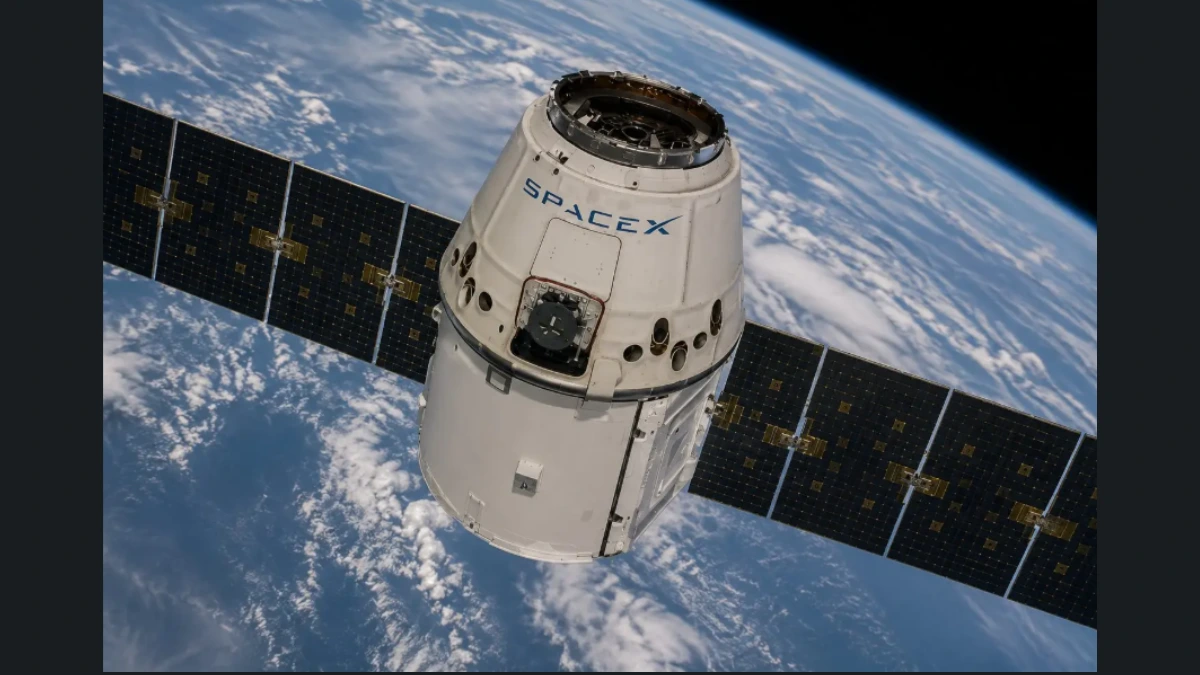
spacex starlink satellite deorbit : SpaceX has retired another 260 Starlink satellites, sending them into a controlled re-entry that caused the spacecraft to burn up in Earth’s atmosphere. The latest deorbit operations took place between December 2025 and May 2026, according to a report the company submitted to the U.S. Federal Communications Commission (FCC).
The retired satellites include 176 first-generation Starlink spacecraft, while the remaining units were newer second-generation models. SpaceX also confirmed that 349 additional satellites have already been taken out of service and will be deorbited in the coming months, meaning the number of atmospheric re-entries is expected to continue rising.
Starlink is the world’s largest satellite internet constellation, with more than 10,000 satellites operating in low-Earth orbit. Each satellite is designed to remain in service for around five years before being replaced by newer, more capable models. Rather than leaving inactive satellites in orbit, SpaceX performs controlled deorbit maneuvers that allow them to safely disintegrate during atmospheric re-entry, reducing the risk of creating long-term space debris.
The growing number of satellite retirements reflects the rapid expansion of the Starlink network. As SpaceX continues launching replacement satellites, older spacecraft are being removed at a faster pace. Industry observers say several Starlink satellites can now be deorbited on a single day as the company refreshes its massive orbital fleet.
While controlled re-entry helps keep Earth’s orbit cleaner, scientists are increasingly studying its environmental impact. Researchers have raised concerns that satellites burning up in the upper atmosphere release materials such as aluminum oxides, which could affect atmospheric chemistry if satellite re-entries continue to increase over the coming years. Although the long-term effects remain under investigation, experts say more research is needed as global satellite constellations continue to grow.
The discussion comes as regulators review environmental policies for commercial satellite operators. ( spacex starlink satellite deorbit ) The FCC has proposed exempting many space-based operations from certain environmental reviews, arguing that satellite activities occur outside U.S. territory. The proposal has generated debate among researchers who believe the environmental consequences of frequent satellite re-entries deserve closer examination.
Despite the concerns, controlled atmospheric disposal remains the standard method for retiring low-Earth orbit satellites. By intentionally guiding aging spacecraft back into the atmosphere, operators aim to minimize collision risks and prevent inactive satellites from adding to the growing amount of orbital debris. With thousands more Starlink satellites expected to launch in the coming years, both satellite deployment and controlled re-entries are likely to become increasingly common as the global demand for space-based internet services continues to expand.