
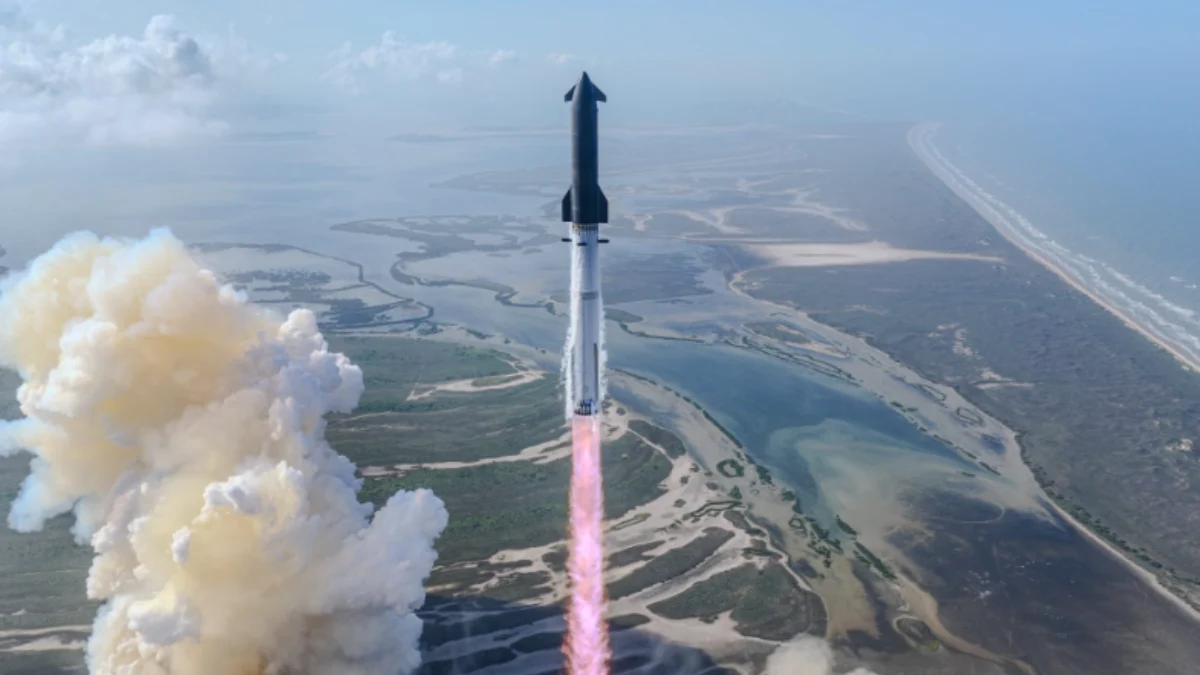
SpaceX celebrated a significant achievement after Starship Flight 13 successfully launched from the company’s Starbase facility in Texas on July 24. The mission marked another important milestone in the development of the fully reusable rocket system designed to support future missions to the Moon, Mars, and beyond. After previous delays caused by weather and technical checks, the massive launch vehicle lifted off smoothly, drawing excitement from engineers and space enthusiasts around the world.
Flight 13 Delivers Key Mission Objectives
The mission carried 20 next-generation Starlink satellites, making it the first Starship flight to deploy operational satellites into space. During the test, SpaceX also completed an in-space engine relight, demonstrating another critical capability needed for future orbital and deep-space missions. Throughout the flight, engineers collected valuable performance data on the spacecraft’s propulsion, guidance systems, and overall flight stability.
Smooth Splashdown Highlights Improved Performance
One of the biggest successes of Flight 13 came during the spacecraft’s return to Earth. Starship completed its smoothest splashdown in the Indian Ocean to date, showing major improvements in reentry control and heat shield performance. Although the Super Heavy booster was unable to complete a perfect return because of engine relight issues during descent, SpaceX considered the overall mission a major step forward thanks to the successful performance of the upper-stage spacecraft.
Advanced Heat Shield Undergoes Critical Testing
Engineers used Flight 13 to evaluate upgraded thermal protection systems designed to withstand the extreme temperatures of atmospheric reentry. Cameras and sensors mounted on both the spacecraft and several Starlink satellites captured valuable information throughout the mission. The data will help SpaceX improve Starship’s durability and prepare the vehicle for longer missions that require multiple launches and safe returns.
Building Toward NASA’s Artemis Program
The successful mission supports SpaceX’s growing role in NASA’s Artemis program, where Starship has been selected as the lunar lander for future astronaut missions to the Moon. Every successful test flight brings the company closer to certifying the spacecraft for human spaceflight while demonstrating technologies needed for lunar landings, cargo deliveries, and future exploration beyond Earth’s orbit.
SpaceX Looks Ahead to Future Starship Missions
Despite a few technical challenges, Flight 13 delivered several important accomplishments that move the Starship program forward. SpaceX praised the efforts of its launch team, noting that each test provides valuable lessons that improve the rocket’s reliability and performance. With successful satellite deployment, engine testing, and an improved splashdown, Starship Flight 13 represents another major milestone as SpaceX continues working toward fully reusable space transportation and its long-term vision of sending humans to Mars.
To know more for Business & Finance news