
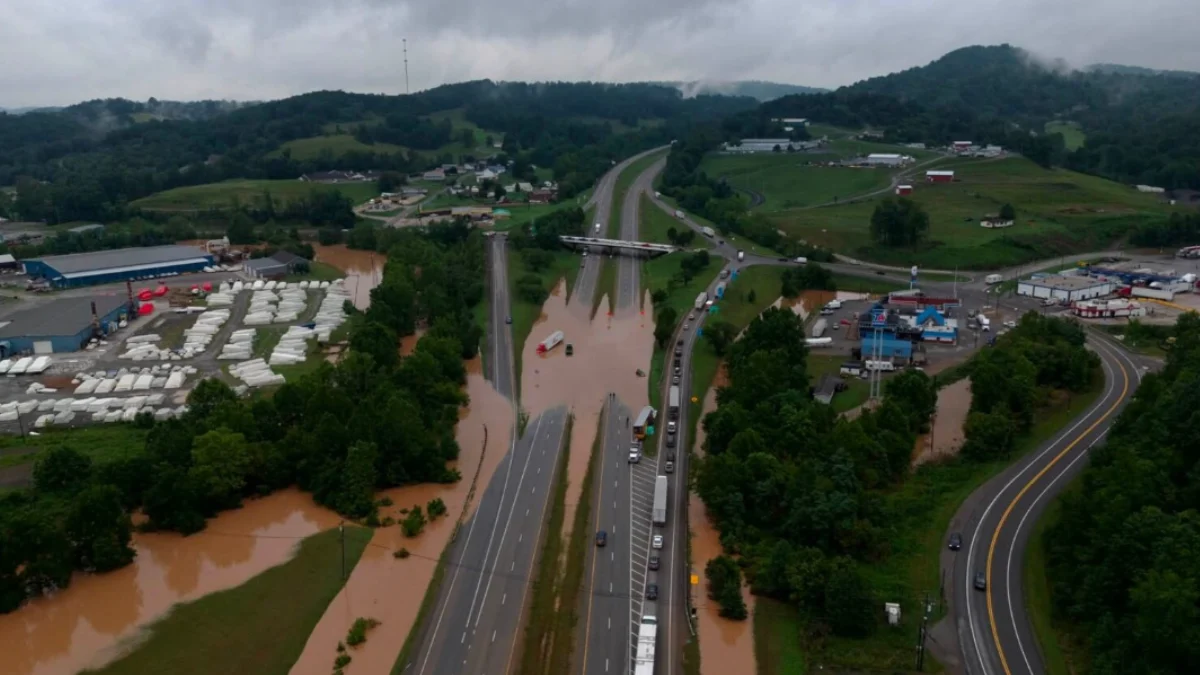
West Virginia is facing one of its most destructive flooding disasters in recent years after catastrophic flash floods claimed the lives of two people and forced emergency officials into a large-scale rescue operation. Days of relentless rainfall caused rivers, creeks, and streams to overflow, sending powerful floodwaters through neighborhoods, businesses, and rural communities. The rapidly changing conditions left little time for many residents to react, prompting emergency evacuations and dozens of water rescues.
Governor Patrick Morrisey declared a state of emergency as the flooding intensified, allowing state agencies to mobilize additional resources and coordinate with local emergency responders. The declaration also paved the way for emergency assistance to affected counties as rescue teams worked around the clock to reach stranded residents. Officials warned that the danger was far from over, urging people to stay away from flooded roads and to follow evacuation orders whenever instructed.
Emergency management officials said the storm produced extraordinary rainfall over a short period, overwhelming drainage systems and turning normally calm waterways into fast-moving torrents. Entire neighborhoods were left underwater, while roads and bridges suffered severe damage, making travel nearly impossible in some areas.
Rescue Crews Battle Dangerous Conditions
First responders faced extremely hazardous conditions as they carried out rescue missions across the flood-ravaged region. Local firefighters, police officers, emergency medical teams, and members of the West Virginia National Guard worked together to save residents trapped inside homes, vehicles, and businesses surrounded by rising water.
Several rescue operations required specialized boats and high-water vehicles after floodwaters quickly submerged streets. In some communities, emergency crews had to navigate strong currents, floating debris, and damaged infrastructure to reach people waiting for help.
Authorities said dozens of water rescues were completed during the height of the flooding, while emergency shelters were opened to provide temporary housing for families forced to evacuate. Volunteers and relief organizations also joined the response, distributing food, water, blankets, and other emergency supplies to those displaced by the disaster.
Officials stressed that even after rainfall began to ease, floodwaters remained extremely dangerous. Swift-moving water continued to threaten motorists, prompting repeated warnings against attempting to drive through flooded roadways.
Communities Face Widespread Damage
The floodwaters left behind extensive destruction across several counties. Homes suffered major structural damage as water rushed through neighborhoods, while businesses experienced significant financial losses from flooding and debris.
Transportation infrastructure was among the hardest hit. Roads were washed away, bridges sustained heavy damage, and numerous highways were closed because of flooding or landslides. Utility crews worked to restore electricity after thousands of customers experienced power outages caused by the severe weather.
Schools, government offices, and many local businesses temporarily closed while officials assessed damage and ensured public safety. Public works departments began clearing fallen trees, mud, and debris from roads to restore access to isolated communities.
Residents described the flooding as unlike anything they had experienced in years. Many reported watching water levels rise within minutes, leaving little opportunity to protect their homes or belongings before being forced to evacuate.
State and Federal Agencies Coordinate Response
Following the emergency declaration, state officials coordinated closely with local governments and emergency management agencies to speed up rescue and recovery efforts. The West Virginia National Guard deployed personnel and equipment to assist with evacuations, transportation, and damage assessments.
Emergency operations centers remained active throughout the disaster, monitoring weather conditions and coordinating rescue requests from affected communities. Officials continued to evaluate infrastructure damage while identifying areas most in need of immediate assistance.
Weather experts noted that several locations received exceptionally heavy rainfall in only a few hours, dramatically increasing the risk of flash flooding. Saturated ground also heightened the possibility of additional landslides, especially in the state’s mountainous terrain.
Authorities urged residents to remain informed through official weather alerts and emergency notifications, emphasizing that conditions could still change rapidly despite improving weather.
Recovery Efforts Begin While Challenges Continue
As floodwaters gradually receded, attention shifted toward recovery. Emergency crews began inspecting damaged homes, clearing roads, and restoring essential services, but officials cautioned that rebuilding would take considerable time.
Residents were encouraged to document property damage for insurance claims and to report losses through local emergency management offices. Community organizations and volunteers also stepped forward to assist families with cleanup efforts and provide support to those who lost homes or personal belongings.
Health officials reminded residents to exercise caution during cleanup because floodwaters often contain contaminants, debris, and hazardous materials. People returning to damaged homes were advised to wear protective equipment and avoid entering structures until they had been inspected for safety.
Meanwhile, utility companies continued working to restore electricity, water service, and communications infrastructure in affected areas. Local governments also began evaluating long-term repairs to roads, bridges, and public facilities damaged by the flooding.
Extreme Weather Highlights Growing Flood Risks
The disaster has renewed concerns about the increasing frequency and severity of extreme weather events across Appalachia. Experts say intense rainfall occurring within short periods can overwhelm rivers and drainage systems, particularly in mountainous regions where runoff moves quickly into valleys and communities.
Emergency management officials continue urging residents to prepare for future severe weather by creating emergency plans, monitoring forecasts, and keeping disaster supply kits readily available. They also emphasized the importance of respecting flood warnings and avoiding travel during dangerous weather conditions.
Although rescue and recovery operations remain underway, officials say the coming weeks will focus on rebuilding damaged communities and helping families recover from the devastating impact of the floods. For many residents, the road to recovery will be long, but state and local agencies have pledged continued support as West Virginia begins the difficult task of rebuilding after one of its most destructive flood emergencies in recent memory.
To know more for Business & Finance news