
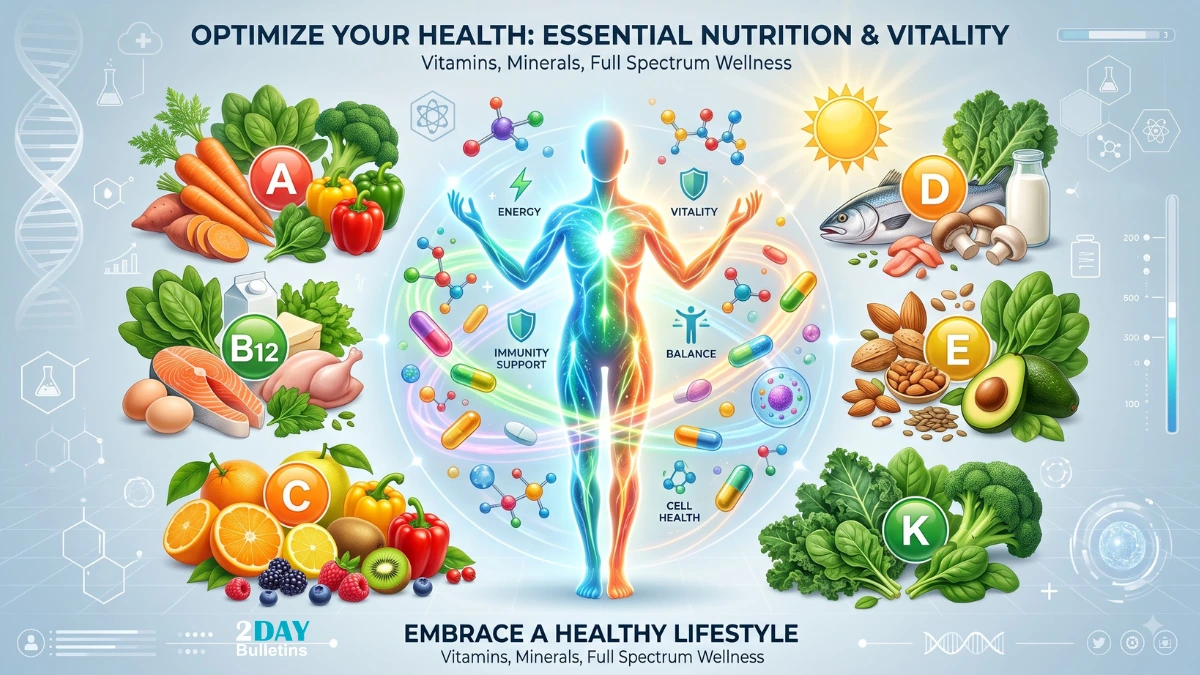
Vitamins are essential nutrients that help your body perform important functions such as producing energy, supporting immunity, maintaining strong bones, improving brain function, and protecting cells from damage.
Many people ask, “What are the best vitamins to take?” The answer depends on individual health needs, age, lifestyle, diet, and nutritional status. However, certain vitamins are considered essential because they support key areas of overall health.
This complete guide explains the best vitamins, their benefits, natural food sources, and how they contribute to a healthier lifestyle.
What Are Vitamins?
Vitamins are organic nutrients required by the body in small amounts to maintain normal growth, repair, and body functions. Since the body cannot produce most naturally, they must come from food or supplements when necessary.
Types of Vitamins
| Type of Vitamin | Vitamins Included | How They Work |
|---|---|---|
| Fat-Soluble Vitamins | Vitamin A, D, E, K | Stored in body fat and support vision, bones, immunity, and cell protection |
| Water-Soluble Vitamins | Vitamin C and B-complex vitamins | Need regular intake and support metabolism, immunity, and energy production |
Best Vitamins for Overall Health
1. Vitamin D – The Bone and Immunity Vitamin
Vitamin D is one of the most important vitamins for maintaining healthy bones, muscles, and immune function. It helps the body absorb calcium and supports normal cell activity.
| Vitamin | Main Benefits | Food Sources |
| Vitamin D | Strong bones, immune support, muscle health | Sunlight, salmon, tuna, egg yolks, fortified milk |
Health Benefits of Vitamin D:
- Supports calcium absorption
- Helps maintain strong bones and teeth
- Supports immune system function
- Helps maintain muscle strength
2. Vitamin C – The Immunity and Skin Health Vitamin
Vitamin C is a powerful antioxidant that protects cells and supports collagen production for healthy skin.
| Vitamin | Main Benefits | Food Sources |
| Vitamin C | Immunity, skin health, antioxidant protection | Oranges, lemons, strawberries, kiwi, peppers, broccoli |
Benefits of Vitamin C:
- Supports immune defenses
- Helps maintain healthy skin
- Supports wound healing
- Improves iron absorption
3. Vitamin B12 – The Energy and Brain Health Vitamin
Vitamin B12 plays a major role in nerve health, red blood cell production, and normal brain function.
| Vitamin | Main Benefits | Food Sources |
| Vitamin B12 | Energy metabolism, nerve function, brain support | Fish, meat, eggs, dairy products, fortified foods |
Benefits of Vitamin B12:
- Supports normal energy production
- Helps maintain healthy nerves
- Supports memory and concentration
- Helps create healthy blood cells
4. Vitamin A – The Vision and Skin Vitamin
Vitamin A is important for healthy vision, immune function, and maintaining skin health.
| Vitamin | Main Benefits | Food Sources |
| Vitamin A | Eye health, immunity, skin maintenance | Carrots, sweet potatoes, spinach, pumpkin, eggs |
Benefits of Vitamin A:
- Supports healthy eyesight
- Helps maintain skin cells
- Supports immune function
- Promotes normal growth and development
5. Vitamin E – The Antioxidant Vitamin
It helps protect body cells from oxidative stress and supports healthy skin and immune function.
| Vitamin | Main Benefits | Food Sources |
| Vitamin E | Cell protection, skin health, immunity | Almonds, sunflower seeds, nuts, spinach, vegetable oils |
Benefits of Vitamin E:
- Protects cells from damage
- Supports healthy aging
- Helps maintain skin health
- Supports immune function
6. Vitamin K – The Bone and Blood Health Vitamin
This is essential for normal blood clotting and maintaining strong bones.
| Vitamin | Main Benefits | Food Sources |
| Vitamin K | Bone strength and blood health | Kale, spinach, broccoli, green vegetables |
Benefits of Vitamin K:
- Supports bone health
- Helps normal blood clotting
- Supports cardiovascular wellness
7. B-Complex Vitamins – Energy and Metabolism Support
B vitamins work together to support metabolism, brain function, and energy production.
| Vitamin | Main Function | Food Sources |
| Vitamin B1 | Energy production and nerve function | Whole grains, beans, nuts |
| Vitamin B2 | Cell growth and energy support | Dairy, eggs, lean meats |
| Vitamin B3 | Metabolism and skin health | Fish, poultry, grains |
| Vitamin B6 | Brain and immune support | Fish, bananas, potatoes |
| Vitamin B9 (Folate) | Cell growth and development | Leafy greens, beans |
| Vitamin B12 | Nerve and blood health | Meat, fish, dairy |
Best Vitamins for Specific Health Goals
Vitamins for Immune Health
| Vitamin | How It Supports Immunity |
| Vitamin C | Helps protect cells and supports immune response |
| Vitamin D | Supports immune system regulation |
| Vitamin A | Helps maintain protective body tissues |
| Vitamin E | Provides antioxidant protection |
Vitamins for Brain Health
| Vitamin | Brain Health Benefits |
| Vitamin B12 | Supports nerve function and memory |
| Vitamin D | Supports healthy brain activity |
| Vitamin E | Protects brain cells from oxidative stress |
| Folate (B9) | Supports normal brain function |
Vitamins for Skin Health
| Vitamin | Skin Benefits |
| Vitamin C | Supports collagen production |
| Vitamin A | Helps maintain healthy skin cells |
| Vitamin E | Protects skin from oxidative stress |
| Vitamin D | Supports skin health |
Vitamins for Energy
| Vitamin | Energy Role |
| Vitamin B12 | Helps convert food into energy |
| Vitamin B6 | Supports metabolism |
| Vitamin B1 | Helps release energy from carbohydrates |
| Vitamin C | Supports normal body functions |
Vitamin-Rich Foods Chart
| Food | Important Vitamins |
| Orange | Vitamin C |
| Carrot | Vitamin A |
| Spinach | Vitamins A, C, K, Folate |
| Eggs | Vitamins A, D, B12 |
| Salmon | Vitamin D, B12 |
| Almonds | Vitamin E |
| Dairy Products | Vitamin D, B12 |
| Beans | B Vitamins, Folate |
Should You Take Supplements?
Vitamin supplements can be useful when your body does not receive enough nutrients from food. However, supplements should not replace a healthy diet.
| Situation | May Need Extra Attention |
| Limited sunlight exposure | Vitamin D levels |
| Vegetarian or vegan diet | Vitamin B12 intake |
| Poor dietary variety | Multiple nutrient gaps |
| Certain health conditions | Professional guidance |
Always consider your personal health needs before starting supplements.
How to Get More Vitamins Naturally
The best way to get essential vitamins is through a balanced diet.
Include More:
| Food Group | Examples |
| Fruits | Berries, oranges, apples |
| Vegetables | Spinach, broccoli, carrots |
| Protein Foods | Eggs, fish, beans |
| Healthy Fats | Nuts, seeds, avocado |
| Whole Grains | Oats, brown rice, quinoa |
Frequently Asked Questions (FAQs)
What are the best vitamins to take daily?
The most important vitamins include vitamin D, vitamin C, B vitamins, vitamin A, vitamin E, and vitamin K. Individual needs vary depending on diet and health conditions.
Which vitamin gives the most energy?
B vitamins, especially vitamin B12 and vitamin B6, help support normal energy metabolism.
Which vitamin is best for immunity?
Vitamin C and vitamin D are commonly associated with immune support, along with a balanced diet.
What vitamins are good for brain health?
Vitamin B12, vitamin D, vitamin E, and folate support normal brain and nervous system functions.
Is food better than vitamin supplements?
Whole foods are generally the best source of vitamins because they provide a combination of nutrients, fiber, and beneficial compounds.
Conclusion: Choosing the Best Vitamins for Better Health
The best vitamins are those that support your body’s specific nutritional needs. these such as vitamin D, vitamin C, vitamin B12, vitamin A, vitamin E, and vitamin K play important roles in immunity, energy, brain health, skin health, and overall wellness.
A balanced diet containing fruits, vegetables, whole grains, lean proteins, and healthy fats is the foundation of good nutrition. Supplements may help fill nutritional gaps when needed, but healthy eating habits remain the most important step toward long-term wellness.
Follow us for Healthy news