
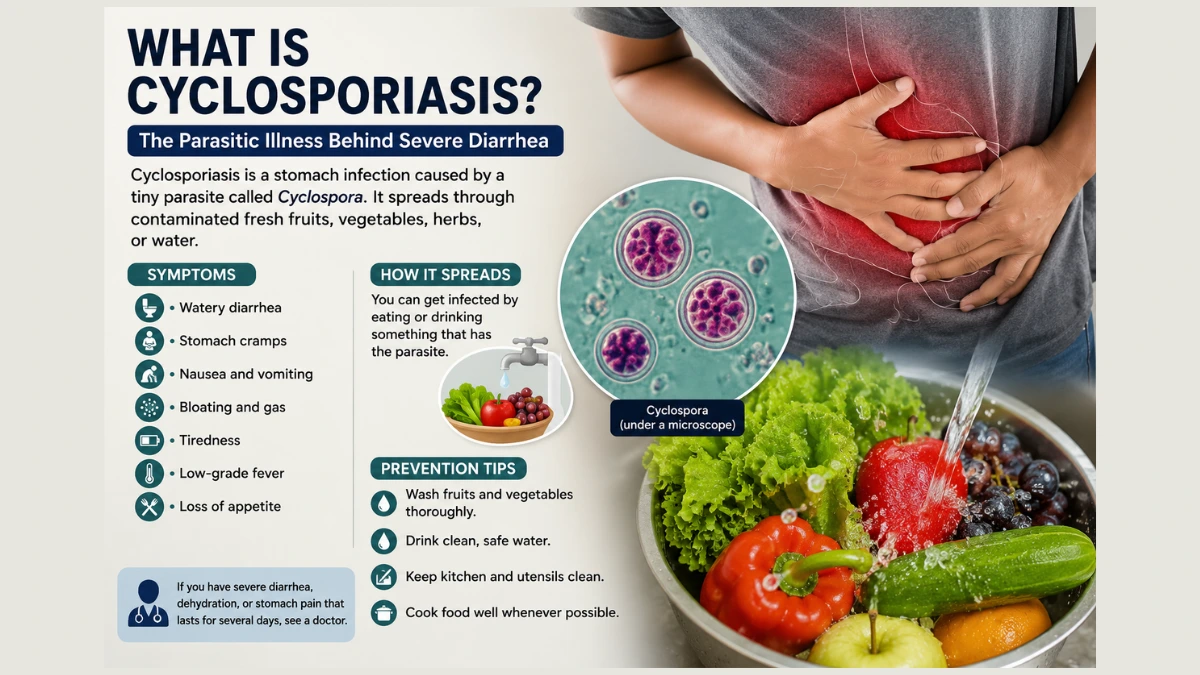
Cyclosporiasis is a stomach infection caused by a tiny parasite called Cyclospora. People can get sick after eating contaminated fresh fruits, vegetables, herbs, or drinking unsafe water. Health officials in the United States have reported an increase in cases, leading to concern about food safety. Unlike some other illnesses, cyclosporiasis usually does not spread directly from one person to another.
The infection mainly spreads through contaminated food or water. The most common symptom is watery diarrhea, which can become severe. Other symptoms include stomach cramps, nausea, vomiting, tiredness, bloating, loss of appetite, and sometimes a mild fever. These symptoms often appear about a week after the parasite enters the body and may last for several weeks if left untreated. Doctors can diagnose the illness with a stool test and usually prescribe antibiotics to help patients recover more quickly.
Health experts say simple food safety steps can help reduce the risk of infection. Fresh fruits and vegetables should be washed well before eating, and clean water should always be used for drinking and cooking. Keeping kitchen surfaces and utensils clean also helps lower the chance of contamination. Although washing produce may not remove every parasite, it is still an important habit.
People who have severe diarrhea, dehydration, or stomach pain that lasts for several days should seek medical care as soon as possible. Early treatment can prevent complications and speed up recovery. As health authorities continue to investigate the recent rise in cases, they are reminding the public to stay informed, practice good hygiene, and follow safe food-handling habits to protect themselves and their families from this foodborne illness.