
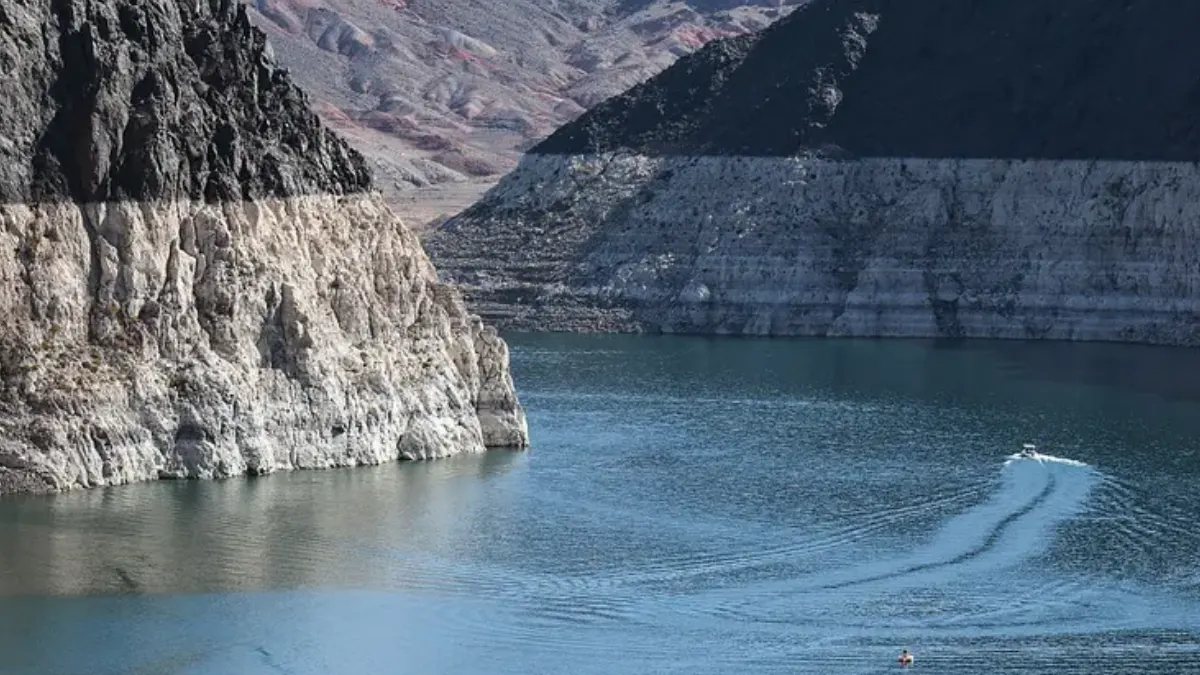
Lake Mead Nevada has fallen to its lowest water level since the massive reservoir on the Arizona-Nevada border was first filled in the 1930s. The latest decline at Lake Mead is raising concerns about water supplies, hydropower and the future of the Colorado River system.
According to data from the U.S. Bureau of Reclamation cited by TIME, the reservoir recently stood at about 1,040.3 feet above sea level, below the previous record low recorded in July 2022. The continuing decline highlights the growing pressure on a water system already affected by drought, warmer temperatures and high demand.
Water Crisis Raises Regional Concerns
Lake Mead is a vital source of water for Arizona, California, Nevada and other communities connected to the Colorado River Basin. The reservoir supplies water for households, farms, businesses and industries, making its shrinking level an important concern for the region.
Lake Powell, another major Colorado River reservoir, is also experiencing extremely low conditions, with the combined storage of the two reservoirs reaching its lowest level in decades. Water managers are facing difficult choices as they attempt to balance limited supplies with the needs of millions of residents and large agricultural operations.
Federal officials have discussed additional reductions in water use, but proposed cuts have already created disagreements among states.
Hoover Dam Faces Growing Pressure
The falling level of Lake Mead is also creating concerns for Hoover Dam, which depends on the reservoir to generate hydroelectric power. The reservoir is moving closer to the elevation at which some of the dam’s turbines could stop operating, potentially reducing electricity production for communities and industries that depend on the facility.
A continued decline could therefore create challenges beyond water shortages, adding pressure to the region’s energy supply. Officials and water managers are closely watching reservoir levels as they prepare for future conditions.
The situation demonstrates how prolonged drought, climate conditions and rising water demand can affect critical infrastructure across the American West. While conservation efforts may help slow the decline, Lake Mead’s record-low level underscores the need for long-term solutions to protect water and power supplies.
The coming months could be crucial as states negotiate how to manage the Colorado River and respond to increasingly limited water resources.
Source : time