
Techtember has officially dawned upon us, and we’re starting off strong with IFA 2026. While the show floor isn’t quite open to the public just yet, Lenovo has already pulled back the curtain on a massive slate of new hardware at its Innovation World conference.
The announcements span just about every corner of Lenovo’s portfolio, from new Yoga and ThinkBook laptops to tablets, desktops, monitors, and of course, a couple of experimental concepts. There’s a lot to get through, but the new Yoga Creator lineup is easily among the biggest highlights.
Lenovo is giving its Yoga laptops some serious RTX Spark muscle
Creators are getting the full RTX treatment
I’ve only been in Berlin for two days, and if there’s one term I’ve heard more than anything else, it’s RTX Spark. Nvidia’s new platform has been everywhere so far, and Lenovo clearly doesn’t plan on sitting this one out.
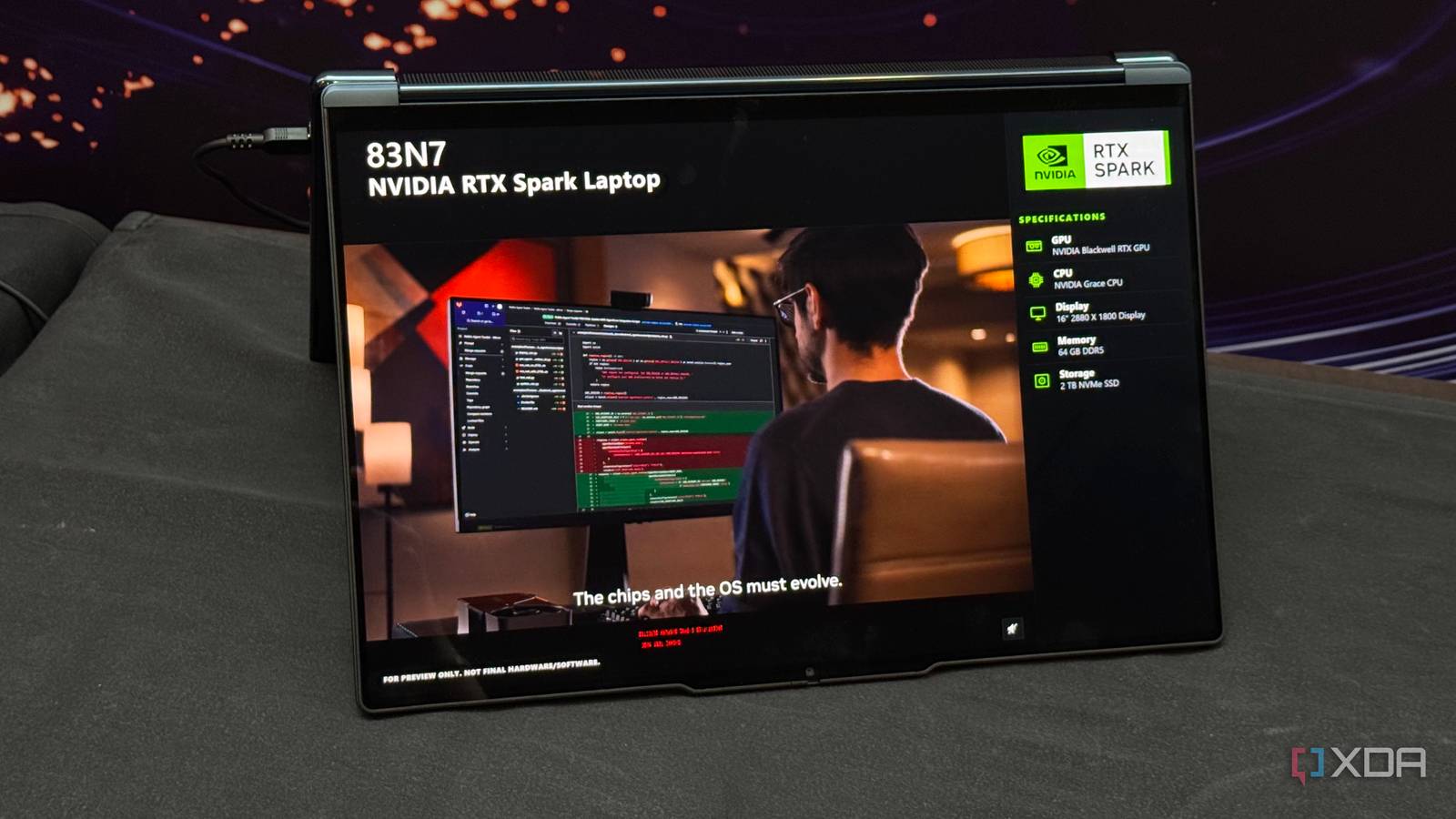
On Thursday, the company announced the two newest additions to its Yoga lineup: the Yoga Pro 9n and Yoga 9n 2-in-1. Both laptops are powered by Nvidia’s RTX Spark platform, which includes an Nvidia Grace CPU with up to 20 cores. On the graphics side, both pack an Nvidia Blackwell RTX GPU with up to 6,144 cores.
The Yoga Pro 9n sports a 15.3-inch 2.5K OLED display with a variable refresh rate ranging from 48Hz to 165Hz. It can also be configured with up to a whopping 128GB of 9400 MT/s unified memory and 4TB of internal storage, making it the more performance-focused of the two!
The Yoga 9n 2-in-1, meanwhile, gets a larger 16-inch 2.8K OLED display with a refresh rate of up to 120Hz, along with up to 64GB of 9400 MT/s unified memory. As its name suggests, it also has a 360-degree hinge, but what I find most interesting is the haptic Force Pad! In addition to functioning as a haptic touchpad, Lenovo says you can use the included pen directly on its surface, giving you another place to sketch or jot things down without reaching for the display.

Lenovo’s Yoga lineup has long catered to creators, but what makes this year’s lineup a bit different is the shift in creators’ priorities and how Lenovo is embracing it. The company explained that RTX Spark will enable creators to run demanding AI models locally while also providing the horsepower for their more traditional creative workloads, such as video editing, 3D rendering, and design work.
At the time of writing, Lenovo hasn’t revealed pricing or availability for either laptop, with those details set to be announced closer to launch.
Lenovo has its own answer to the MacBook Neo
Understandably wants a piece of the budget MacBook crowd
Beyond RTX Spark being a clear theme at IFA this year, another trend I’ve noticed is just how much attention companies are paying to affordable laptops. A lot of these launches are clearly geared toward students and young professionals, and most of their descriptions are starting to sound pretty similar: lightweight, colorful, AI-ready, and designed to handle the basics without costing a fortune.
Lenovo’s new IdeaPad Vibe lineup fits pretty neatly into that category, and it’s hard not to see shades of Apple’s MacBook Neo in what the company is going for here. Lenovo is launching the IdeaPad Vibe in both 14-inch and 15-inch sizes, with prices starting at $700. The IdeaPad Vibe is available in seven colors, including Dreamy Violet, Spicy Gold, Zen Green, Chill Blue, Radiant Coral, Moody Blue, and Lowkey Grey.
Underneath all of that, though, there’s quite a bit of flexibility. You can configure the IdeaPad Vibe with either Snapdragon X or up to AMD Ryzen AI 400 Series processors, with Intel-powered models also coming later. Snapdragon configurations go up to 24GB of memory, while AMD models can be configured with up to 32GB of dual-channel memory that’s actually upgradeable. Both also support up to 1TB of storage and feature dual SSD slots.
Display options depend on which size you choose. The 14-inch model can be configured with up to a WUXGA OLED panel, while the 15-inch version goes up to a 2.1K OLED display, with touch available as an option. There’s a surprisingly decent selection of ports here too, including two USB-A ports, two USB-C ports, HDMI, a microSD card reader, and a headphone jack. The 14-inch model starts at 1.3kg, while the 15-inch version starts at 1.5kg.

Both the Qualcomm and AMD versions are expected to start at $700, with the AMD models arriving first in October. The Qualcomm-powered configurations will follow in November.
Lenovo’s new ThinkBooks take two very different approaches to portability
Would you rather have 26 hours or 990 grams?

Lenovo also announced two new additions to its ThinkBook lineup, and while both are designed with portability in mind, they go about achieving it in pretty different ways.
The ThinkBook 14 Gen 9 is powered by Qualcomm’s Snapdragon X2 Plus platform, which delivers up to 80 TOPS of AI performance. Lenovo is unsurprisingly leaning pretty heavily into Copilot+ PC features here, along with its own Qira experiences. The company claims the laptop can last up to 26 hours of local video playback, which could make it a compelling option for anyone who is always on the move.
Despite that, it isn’t particularly bulky either. The ThinkBook 14 Gen 9 measures 17.7mm thick and starts at 2.8lb (1.3kg), while packing a 14-inch WUXGA display with 400-nit brightness and optional touch support. This model is expected to arrive in October starting at $1,300.
The ThinkBook 14x Gen 2 takes the portability thing much more literally. It weighs just 990g and measures 12.9mm thick, making it one of the thinnest and lightest ThinkBooks Lenovo has made. Under the hood, you’ll find an Intel Core 7 Series 3 processor, while display options include an OLED panel or an LCD touchscreen.
Lenovo is also giving this one a little more personality than you’d typically expect from a ThinkBook. It’ll be available in Luna Grey, Celestial White, Mystic Violet, and Veil Blue, which is a pretty refreshing change from the sea of grey business laptops we’re used to seeing. The ThinkBook 14x Gen 2 is also the cheaper of the two, starting at $1,000, although you’ll have to wait a little longer to get your hands on one. Lenovo says it’ll become available sometime in Q1 2027.
Beyond the laptops I just went through above, Lenovo also announced two new ThinkBook concepts, which you can read all about here. The tech giant also showed off a pair of new Yoga tablets, several ThinkCentre desktops, new IdeaCentre all-in-ones, and a handful of ThinkVision monitors.

The 2DayBulletins Editorial Team publishes accurate, timely, and well-researched news and articles across Trending Topics , Business and Finance , Politics, Entertainment, Sports, Technology, Health, with a focus on delivering reliable information to readers.