
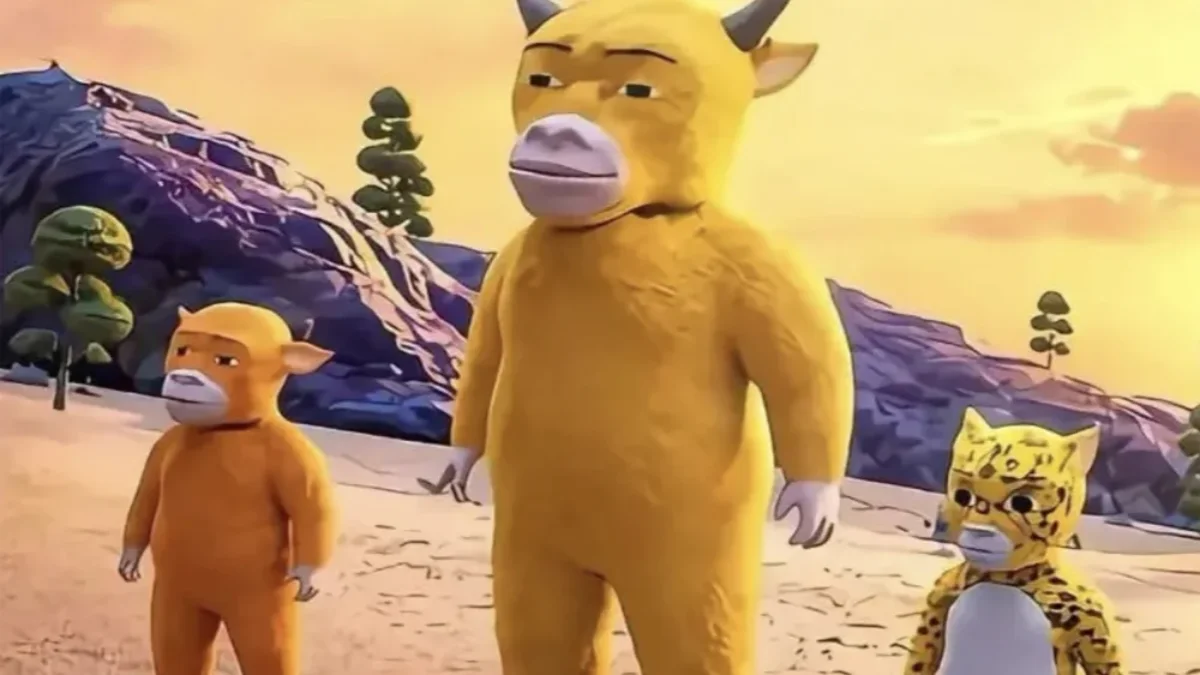
A low-budget Chinese animated film that was mocked online for its crude visuals and unconventional storytelling has become an unlikely box-office sensation, showing how viral attention can transform a movie’s fortunes.
Niu Lai, a Chinese animated feature whose title can be translated roughly as The Ox Comes, initially appeared destined to disappear from theaters. The film earned only about 7,700 yuan during its first 10 days after release, with fewer than 300 tickets sold.
But that changed dramatically after clips of the film began circulating on Chinese social media. Viewers ridiculed its primitive-looking animation and confusing sequences, with some describing the movie as exceptionally poor. The mockery, however, generated curiosity, encouraging people to buy tickets simply to experience the film for themselves.
From Online Mockery to Box-Office Success
The surge turned Niu Lai into one of China’s most unusual cinematic success stories of the year.
Recent reports put the film’s cumulative box-office earnings at more than 14 million yuan, a remarkable turnaround from its nearly nonexistent opening performance. It has even appeared among the country’s better-performing animated releases alongside much larger productions.
The movie’s sudden popularity has been driven largely by social media rather than conventional advertising. Its unusual animation style became the central attraction, with audiences sharing clips and memes that introduced the film to increasingly larger groups of potential moviegoers.
The phenomenon is a classic example of how negative publicity can sometimes have the opposite effect intended by critics: instead of keeping audiences away, it can make them curious.
A Mother-and-Son Production
Perhaps the most unusual part of the story is the film’s production.
Niu Lai was reportedly created by filmmaker Sun Lifang and his mother, Xin Yumeng, over a period of about five years. The pair worked on the project with virtually no conventional production budget or major marketing campaign.
The film’s handmade nature has prompted some viewers to look beyond its technical shortcomings. While many people went to theaters expecting to laugh at the animation, some viewers have reportedly responded positively to the personal story behind its creation.
That has given the movie a second identity beyond its status as an internet joke: a passion project made by two people who spent years trying to bring their idea to the screen.
Critics Remain Divided
Not everyone has been impressed by the film’s success.
Some industry observers have criticized the attention surrounding Niu Lai, arguing that its popularity reflects the power of online trends rather than the quality of the movie itself. The film has been described by critics in extremely negative terms, while others have embraced its unconventional charm.
The debate has also highlighted a broader issue facing the film industry as audiences become increasingly influenced by viral social-media content. A movie no one initially wanted to watch can suddenly become a must-see because viewers want to understand what everyone online is talking about.
A Remarkable Turnaround
Niu Lai is now competing for attention with major international and Chinese releases despite having none of their budgets, marketing campaigns or established stars.
Its success demonstrates that, in the social-media era, a film does not necessarily need a huge advertising campaign to find an audience. Sometimes a handful of viral clips — even clips intended to mock a movie — can provide more exposure than a traditional marketing campaign.
For the creators of Niu Lai, what began as an obscure animated project has become an unexpected box-office phenomenon.
And for movie audiences, the film’s journey offers an unusual lesson: sometimes being called “terrible” can be the best publicity a movie could receive.
Source: nbcnews