
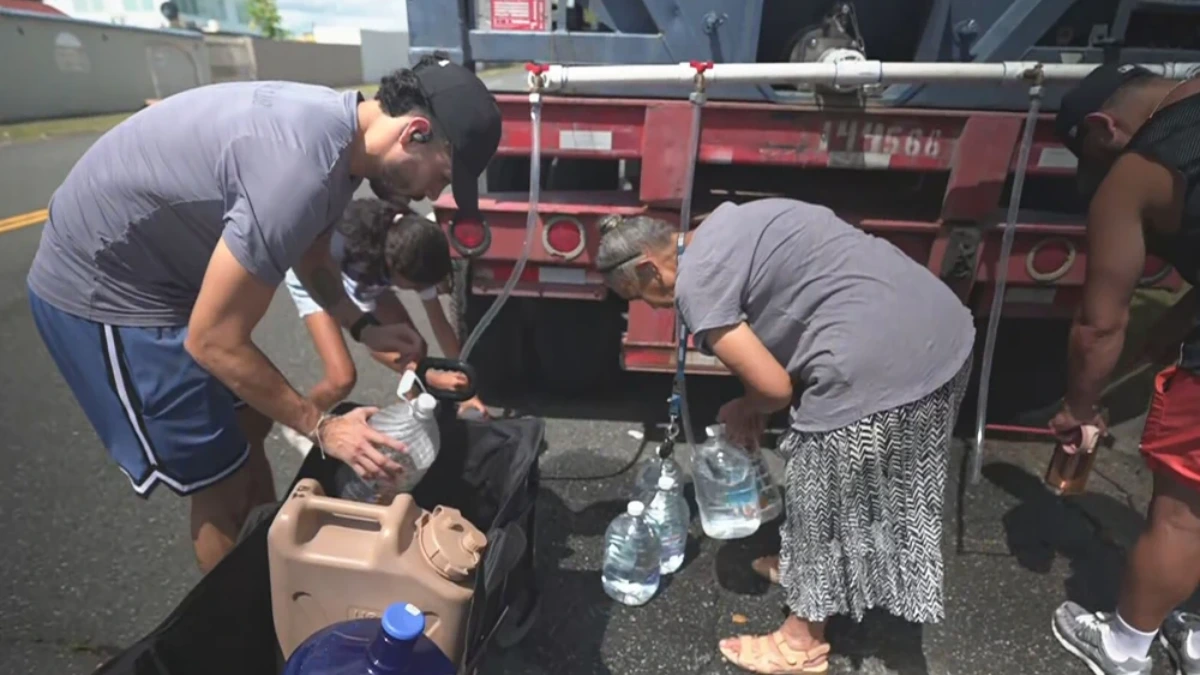
Puerto Rico water crisis is deepening as drought, aging infrastructure and repeated breakdowns in the island’s aqueduct system leave residents across the territory struggling to secure reliable water supplies.
For thousands of people, the problem is no longer simply an inconvenience. Extended interruptions have made it difficult to drink, cook, shower and flush toilets, forcing families and businesses to find alternative sources of water.
The crisis has been particularly severe in and around the San Juan metropolitan area, although communities in other municipalities have also reported disruptions.
A Crisis Fueled by Drought and Aging Infrastructure
Puerto Rico water crisis problems have been building for months. Drought conditions have put additional pressure on reservoirs and the island’s already strained water system, while leaks, ruptured pipes and aging infrastructure have contributed to prolonged outages.
A major rupture involving the Superaqueduct, one of the principal systems supplying water to the northern part of the island, intensified the shortages earlier this year. Repairs and other infrastructure problems have repeatedly disrupted service.
Residents have described going weeks without dependable running water. In some cases, people have relied on stored water, purchased supplies or deliveries from outside sources.
The disruption has also affected businesses. Restaurants and other establishments have had to purchase water or arrange for tank refills simply to remain open, adding significant costs to already challenging operating conditions.
Daily Life Becomes a Struggle
For residents without private cisterns, prolonged outages can quickly become a serious problem.
Households must plan around whatever limited supply becomes available, storing water whenever their taps work. Basic activities such as bathing, washing dishes and using the bathroom can require careful rationing.
Some residents have reported going more than a month without reliable service. NPR reported the experience of a San Juan resident who said he had been without water for nearly two months, illustrating how severe the disruption has become for some households.
The shortages have also created concerns about sanitation and public health. When clean running water is unavailable, residents must find ways to maintain basic hygiene while ensuring that drinking water is safe.
Government Deploys Emergency Assistance
Puerto Rico’s government has responded by activating the National Guard to help distribute drinking water to affected communities.
Water distribution stations have been established in some areas, but residents and local officials have continued to express frustration over the scale and duration of the problem.
The emergency response is occurring against the backdrop of a much larger infrastructure challenge. Repairing individual breaks can restore service temporarily, but the island’s aging water network requires extensive investment and maintenance to prevent recurring failures.
The crisis has also prompted political pressure. Local officials have demanded stronger action from the water authority and the territorial government as residents face repeated interruptions.
Businesses Feel the Impact
The shortage is affecting more than households.
In parts of San Juan, restaurants have struggled to operate normally when water service disappears. Some businesses have been forced to buy water from private suppliers or arrange additional deliveries, expenses that can quickly add up.
Restaurants have also faced practical problems involving bathrooms, cleaning and food preparation.
The disruption comes during a period when Puerto Rico is preparing for the busy hurricane season, adding another layer of concern. Residents and authorities are already aware of how vulnerable the island’s infrastructure can become when major storms strike.
A Warning Ahead of Hurricane Season
The current crisis has revived painful memories of previous disasters, particularly Hurricane Maria in 2017, when Puerto Rico’s infrastructure suffered catastrophic damage and millions of residents endured prolonged interruptions to essential services.
But unlike a hurricane emergency, the current water shortage has developed gradually, driven by a combination of environmental conditions and long-standing infrastructure problems.
That makes the crisis particularly frustrating for many residents. Instead of waiting for a storm to pass, communities are confronting a problem that requires long-term investment and structural improvements.
With drought conditions continuing to put pressure on water supplies, authorities face the difficult task of maintaining service while repairing a system that has struggled for years.
Puerto Rico Searches for a Long-Term Solution
The immediate priority remains getting water to residents who have lost regular service. But the scale of the problem points to a broader question about the future of Puerto Rico’s water infrastructure.
Emergency deliveries can provide temporary relief, but they cannot replace a reliable public water network.
For residents who have spent weeks adjusting their lives around water outages, the hope is that the current crisis will lead to lasting improvements rather than another temporary fix.
Until then, communities across Puerto Rico continue to conserve every drop, store whatever water they can and wait for reliable service to return.
Follow us for Other news