
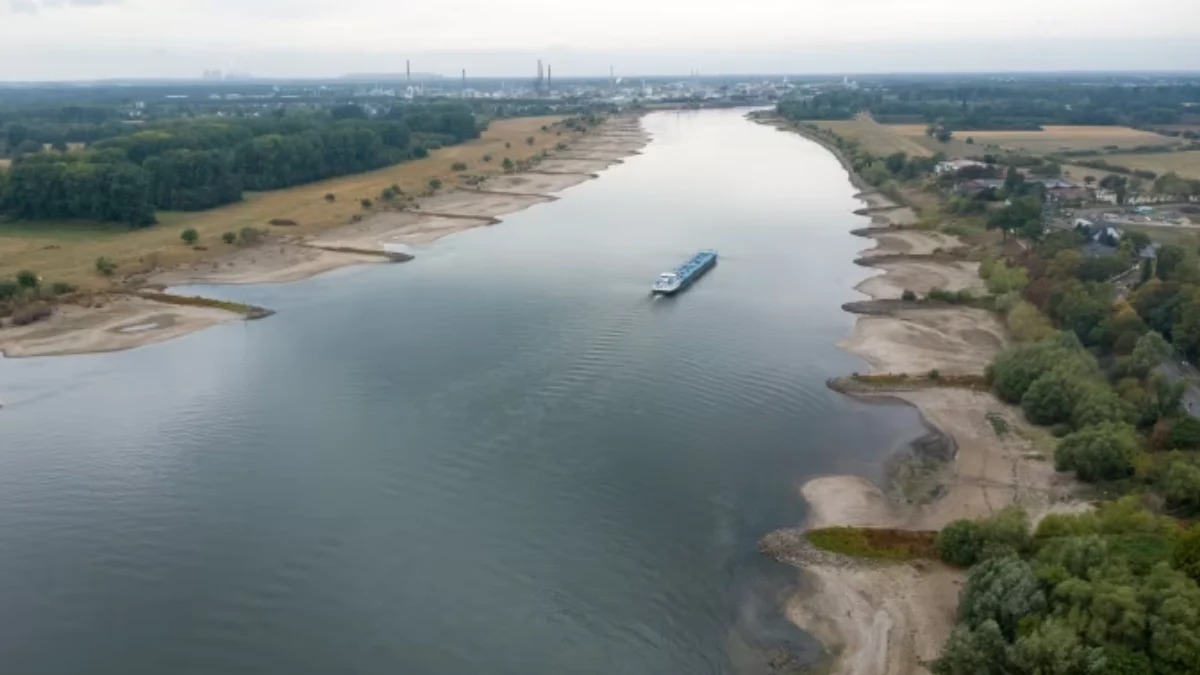
Germany’s economy is facing a fresh challenge as unusually low water levels on the Rhine threaten to disrupt river cruise operations, the movement of goods and already fragile economic growth. The Bundesbank has warned that falling water levels could make transportation along the important river more difficult, potentially affecting industrial production and supply chains.
The Rhine is one of Europe’s most important commercial waterways, connecting major industrial regions with ports and international markets. Manufacturers rely heavily on the river to transport raw materials, fuel and other goods. When water levels fall, cargo vessels cannot operate at full capacity, increasing transportation costs and creating delays for businesses.
Industry Faces Higher Transportation Costs
Low water levels can be particularly challenging for Germany’s industrial sector, which depends on reliable transportation networks. Companies may have to reduce the amount of cargo carried by each vessel or find alternative transportation by road and rail. Both options can increase costs and place additional pressure on businesses.
The Bundesbank’s warning comes as Germany continues to deal with broader economic challenges. Weak industrial activity, high operating costs and uncertainty surrounding global trade have weighed on the country’s economic performance. A disruption to Rhine shipping could add another obstacle to companies already facing difficult conditions.
Energy and chemical companies are among those that can be especially sensitive to disruptions on the river. The Rhine provides an important transportation route for energy products and industrial materials, meaning prolonged low water levels could affect both supply and production.
Weather Adds to Economic Pressure
The Rhine’s water levels can fluctuate significantly depending on rainfall, snowmelt and weather conditions. Extended periods of dry weather can reduce the river’s navigability, creating problems for commercial shipping.
The economic impact will depend partly on how long the low-water conditions last. A temporary decline may create manageable transportation problems, while prolonged disruption could have a wider effect on industrial output and prices.
Germany’s economy has already faced a difficult period, making the latest warning particularly important for policymakers and businesses. The Bundesbank’s assessment highlights how weather-related disruptions can increasingly become an economic concern for countries that depend heavily on major transportation routes.
For German companies, the focus now will be on whether water levels recover quickly enough to prevent significant disruptions. If low levels persist, businesses may face higher logistics costs and additional pressure on production, potentially slowing Germany’s economic recovery further.
Source : wsj.com