
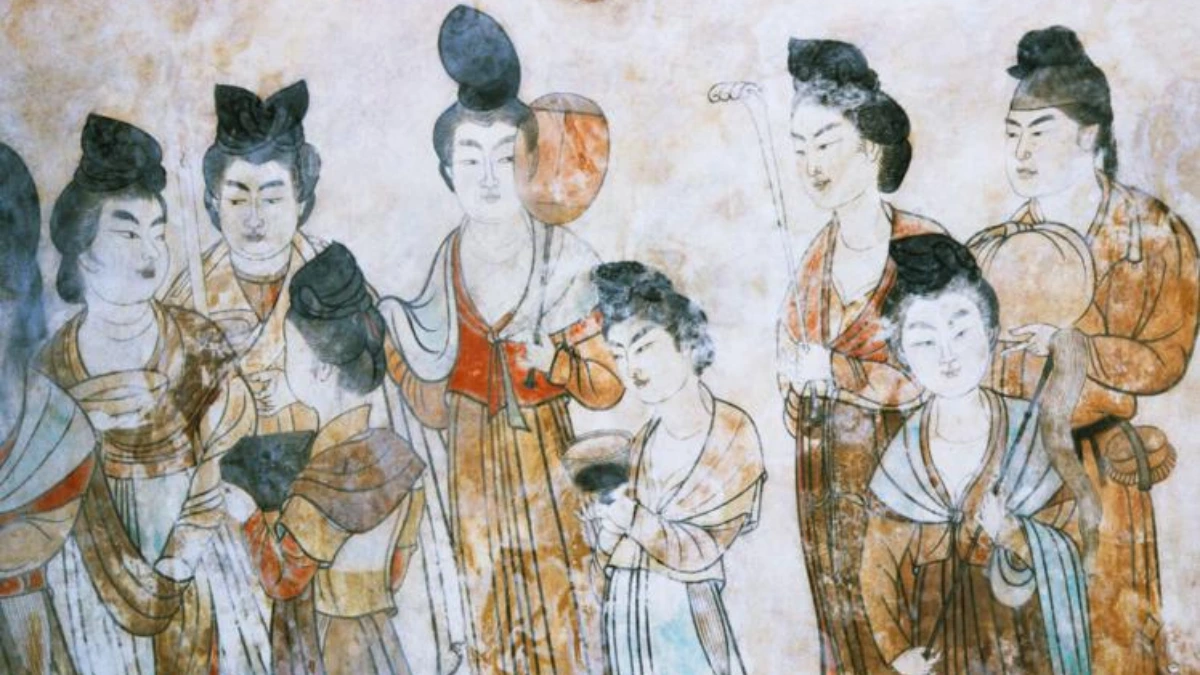
Tang: The claims have attracted widespread attention online despite being rejected by historians and mainstream Chinese media. The debate has become part of a broader phenomenon in which internet users challenge established accounts of China’s past and promote alternative interpretations of historical events.
A Golden Age Under Question
The Tang dynasty, which ruled China from 618 to 907, is widely regarded as one of the country’s cultural and political golden ages.
The period is remembered for its economic prosperity, international trade, advances in art and literature, and the development of Chang’an as a major global city.
Poets including Li Bai and Du Fu became enduring figures of Chinese literature during the era, while Tang-era China maintained extensive connections with Central Asia and other parts of the world.
Yet a fringe online theory has begun questioning whether this celebrated history is genuine.
How the Theory Spread
According to CNN, the claims have circulated across Chinese social media and attracted millions of views.
Supporters of the theory reportedly point to what they describe as inconsistencies in historical records, architecture and archaeological evidence. Some posts have gone further, suggesting that the Tang dynasty was invented or substantially fabricated.
Historians reject those arguments, noting that evidence for the Tang period comes from numerous independent sources, including Chinese records, foreign accounts, inscriptions, coins, manuscripts and archaeological discoveries.
The debate therefore has less to do with conventional historical scholarship than with how information spreads through China’s highly active online communities.
Why the Claims Are Getting Attention
The popularity of the discussion reflects a growing appetite among some internet users for challenging established narratives.
Social media can allow obscure theories to reach huge audiences quickly, particularly when they are presented as revelations that supposedly expose something authorities or historians have hidden.
The Tang dynasty is also an especially powerful symbol in Chinese culture. Its reputation as a period of strength, openness and cultural achievement means that questioning its existence can provoke an unusually strong reaction.
Chinese state-linked voices have pushed back against the claims, portraying them as misinformation rather than legitimate historical research.
Historians Point to Extensive Evidence
The historical record surrounding the Tang dynasty is extensive.
Chinese sources document successive Tang emperors, military campaigns, diplomatic relations and administrative systems. Archaeological discoveries have also provided physical evidence from the period.
Foreign travelers and neighboring civilizations recorded interactions with Tang China, providing additional evidence independent of Chinese imperial histories.
For historians, the sheer volume and diversity of evidence makes the idea that the entire dynasty was fabricated extraordinarily difficult to sustain.
A Larger Debate About History Online
The controversy illustrates a broader challenge facing historians in the digital era: distinguishing legitimate historical questions from viral speculation.
Social media allows ordinary users to examine historical claims, compare sources and challenge conventional interpretations. But the same platforms can also amplify claims that lack credible evidence.
In China’s online environment, such debates can take on an additional dimension because historical narratives are closely connected to national identity and official interpretations of the country’s past.
For now, the theory that the Tang dynasty never existed remains a fringe claim rather than an accepted historical position.
But its ability to attract widespread online attention demonstrates how dramatically social media is changing the way historical narratives are discussed and contested in modern China.
Source: edition