
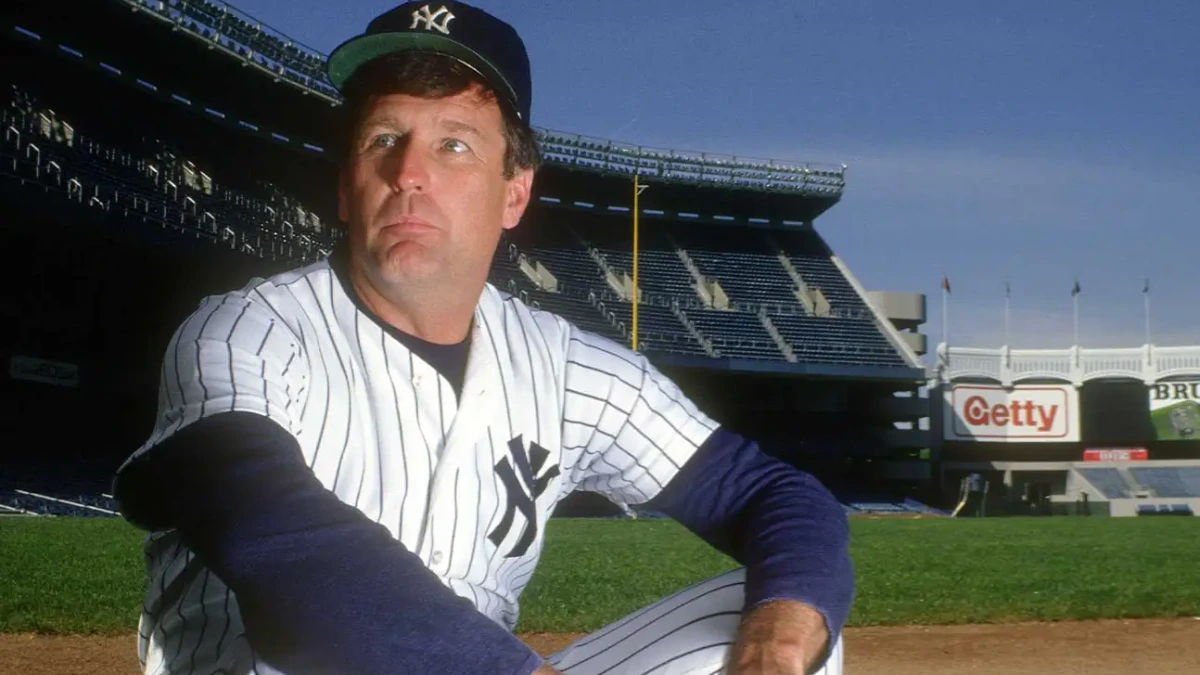
Tommy John, the Major League Baseball pitcher whose remarkable comeback from a devastating elbow injury transformed the sport, has died at 83.
John died Saturday at his home in Bradenton, Florida, after spending recent days in hospice care, according to the New York Yankees. His death was reported Sunday, Aug. 16.
While John enjoyed a distinguished 26-season career, his greatest impact on baseball came after an injury that appeared likely to end his career. In 1974, while pitching for the Los Angeles Dodgers, John suffered a torn ulnar collateral ligament in his left elbow.
Instead of accepting retirement, John agreed to an experimental operation performed by Dodgers team physician Dr. Frank Jobe. The procedure reconstructed the damaged ligament using a tendon, becoming known as Tommy John surgery.
At the time, the operation was considered highly experimental. John nevertheless returned to the mound in 1976 and went on to pitch for another 14 seasons. Remarkably, he won 164 games after the surgery, compared with 124 before it.
A 26-Year MLB Career
John made his major league debut in 1963 and ultimately pitched for six teams, including the Cleveland Indians, Chicago White Sox, Dodgers, New York Yankees and California Angels.
He finished his career with 288 victories and 2,245 strikeouts. He was selected to four All-Star teams and appeared in three World Series. His longevity was particularly remarkable: John continued pitching into his mid-40s before retiring in 1989.
Despite his accomplishments, John never received election to the Baseball Hall of Fame. His career statistics, however, became only part of his historical significance as the surgery that bears his name became one of the most consequential procedures in sports medicine.
The Surgery That Changed Baseball
Tommy John surgery, medically known as ulnar collateral ligament reconstruction, eventually became widely used to repair damaged throwing elbows.
Thousands of baseball players have undergone the procedure since John’s groundbreaking operation. Its success changed the expectations surrounding serious elbow injuries, allowing many pitchers who once might have faced the end of their careers to attempt a comeback.
John’s own recovery provided the proof that made the procedure famous. His return demonstrated that a pitcher could not only survive the operation but regain an elite level of performance afterward.
His comeback also helped give baseball a new understanding of what was possible after major elbow injuries.
A Legacy Beyond the Mound
John’s influence extended beyond his playing career. After retiring, he worked in broadcasting and later managed in the minor leagues. He remained closely associated with the surgery that had changed his career and baseball more broadly.
The Los Angeles Dodgers and New York Yankees were among the organizations to honor John’s contributions following news of his death. Dodgers president and CEO Stan Kasten described John’s role in becoming the first successful recipient of the procedure that eventually carried his name as an impact that would endure for generations.
John’s death marks the passing of a pitcher remembered not simply for his statistics but for helping reshape professional sports. His 288 wins and four All-Star selections secured his place in baseball history, but his successful return from elbow surgery created a legacy that reached far beyond his own career.
For generations of pitchers, Tommy John became more than a name in the record books. He became synonymous with the possibility of coming back.
Source: washingtonpost