
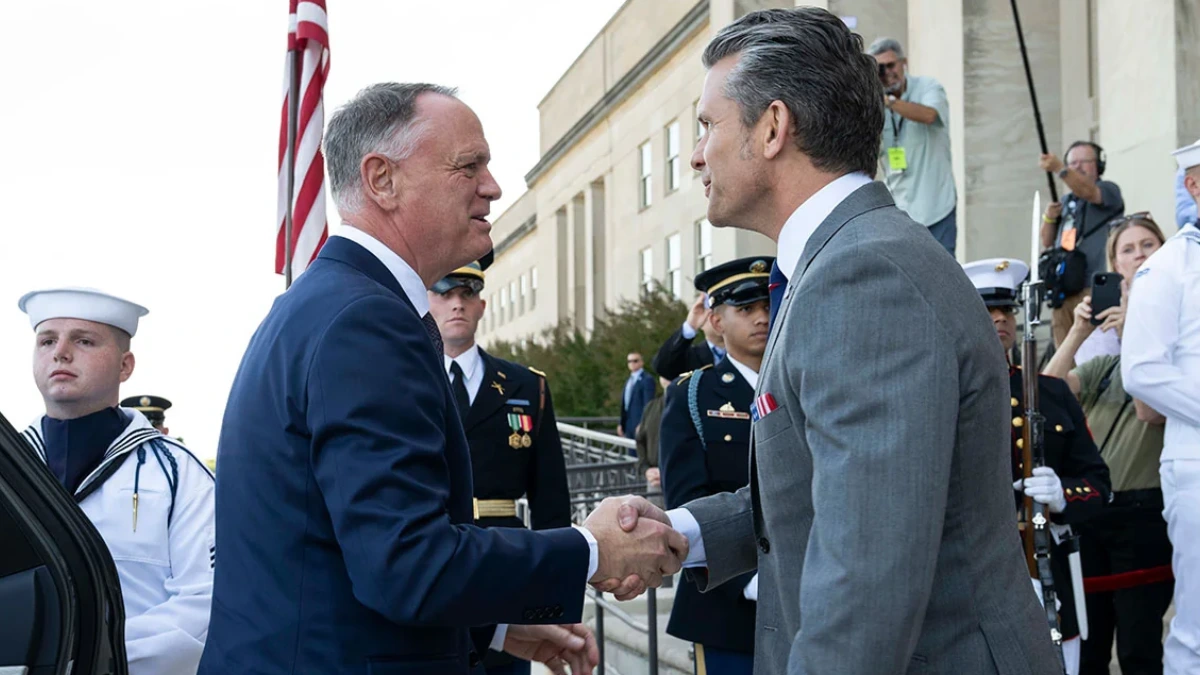
us canada military relationship restrictions The military relationship between the United States and Canada is facing new challenges after U.S. Defense Secretary Pete Hegseth reportedly introduced restrictions on defense cooperation between the two neighboring countries. According to a report published by The Washington Post on November 20, Hegseth issued a classified directive outlining new limits on aspects of the bilateral defense relationship. The move comes amid growing political and economic tensions between Washington and Ottawa, raising questions about the future of one of North America’s most important security partnerships.
Secret Pentagon Memo Raises Concerns us canada military relationship restrictions
The classified memo was reportedly circulated last week, according to officials familiar with the directive who spoke anonymously because of the sensitive nature of the matter. The Washington Post reported that it had not independently reviewed the document, leaving some uncertainty about the precise restrictions and how they will affect day-to-day military cooperation.
One U.S. official reportedly described the decision as something Canadian officials would likely view as a serious diplomatic setback. The Pentagon, however, defended the policy, explaining that the department wants its engagement with Canada to advance clear American defense priorities.
Pentagon spokesman Sean Parnell said the United States is prioritizing cooperation that strengthens the defense of both countries and the wider region while supporting Canada’s ability to meet its NATO responsibilities.
NATO and NORAD Cooperation Expected to Continue
Despite the reported restrictions, the Pentagon has indicated that important areas of military cooperation will remain unchanged. According to the department, the directive will not affect defense intelligence sharing or collaboration through NATO and the North American Aerospace Defense Command (NORAD).
NORAD plays a significant role in protecting North American airspace and maritime approaches through joint military coordination between the United States and Canada. Both countries have also maintained decades of intelligence cooperation through the Five Eyes alliance, which includes the United Kingdom, Australia and New Zealand.
However, an official from one of the Five Eyes member countries reportedly indicated that American officials have shared less information across several platforms over the past year. Although no formal change to intelligence-sharing arrangements has been announced, the development could raise additional concerns among allied governments.
Political and Trade Disputes Add to Growing Tensions us canada military relationship restrictions
The latest defense restrictions come against the backdrop of increasingly strained relations between U.S. President Donald Trump and Canadian Prime Minister Mark Carney. Trump has repeatedly suggested that Canada could become the 51st U.S. state, comments that have generated strong opposition among Canadian political leaders.
Trade disagreements have also contributed to the deterioration in relations. The Trump administration introduced tariffs affecting Canadian steel, aluminum and other products, prompting Ottawa to respond with retaliatory measures.
Canada has also been working to reduce its dependence on American military equipment while strengthening its domestic defense capabilities. In March, Carney announced that Canada had increased defense spending to 2 percent of its gross domestic product, meeting NATO’s previous spending benchmark.
These developments highlight the growing challenges facing the two countries as they attempt to balance economic disagreements with their shared security responsibilities.
Hegseth’s Previous Comments Created Additional Friction
Relations between the two defense establishments have faced further pressure following controversial comments and social media activity by Hegseth.
In August, the defense secretary reposted a photograph featuring a teenage Canadian military cadet and her instructor, prompting criticism from Canadian officials. Canadian Defense Minister David McGuinty described the social media post as inappropriate and below the standards expected of someone holding such a senior position.
Hegseth also faced criticism in Canada after making remarks that appeared to minimize the contributions of American allies during military operations in Afghanistan.
These incidents have added to concerns about the direction of U.S.-Canada defense relations and the level of confidence between military and political leaders.
What Happens Next for U.S.-Canada Relations?
The latest Pentagon directive could mark an important change in how Washington approaches its military partnership with Ottawa. Although intelligence sharing, NATO cooperation and NORAD operations are expected to continue, uncertainty remains about which other areas of bilateral defense engagement will face restrictions.
Both countries have significant reasons to preserve their security relationship, particularly given their shared border, regional security responsibilities and longstanding military cooperation.
For now, the full implications of Hegseth’s classified memo remain unclear. Canadian officials have not publicly detailed their response to the reported directive, and further clarification from both governments may be necessary.
The coming weeks could provide a clearer picture of whether the restrictions represent a limited adjustment to military cooperation or a broader shift in the relationship between two longtime North American allies.