
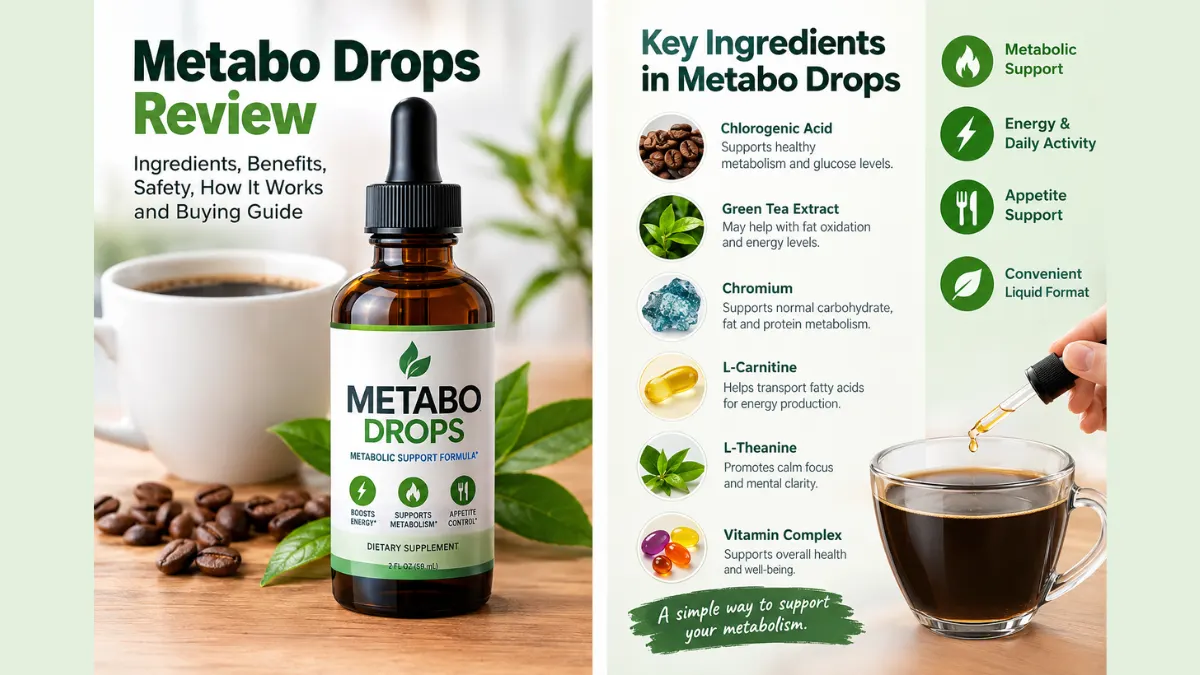
This Metabo Drops review examines the product from those angles. It looks at the advertised ingredients, potential benefits, how the liquid format is used, available research, safety considerations, transparency, and what consumers should realistically expect.
The goal is not to promise a particular amount of weight loss. Instead, Metabo Drops review provides practical information that can help readers decide whether a metabolic-support supplement fits their individual goals and routine.
What Is Metabo Drops?
Metabo Drops is marketed as a liquid dietary supplement intended to support metabolism and weight-management goals. Product websites describe it as a tasteless formula that can be added to coffee or another drink, making it different from conventional capsules and tablets.
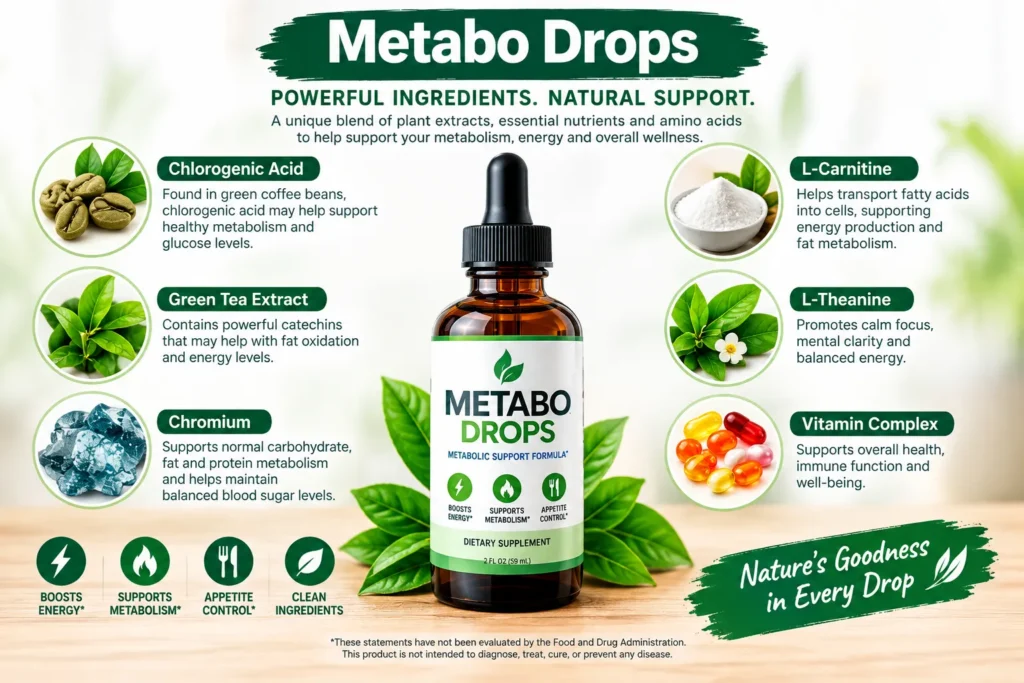
Several product pages describe a formula centered around ingredients such as chlorogenic acid, green tea extract, chromium, L-carnitine, L-theanine, and a vitamin complex. However, the exact formula information varies between websites, which is an important consideration for anyone researching the product.
The product is promoted primarily around metabolic support rather than as a replacement for healthy eating or physical activity. Marketing materials commonly connect the formula with fat oxidation, energy, appetite management, and blood-sugar support.
Those descriptions should not be interpreted as proof that the finished product will produce a specific result. Evidence for an individual ingredient does not automatically establish that a particular combination, dose, or product will deliver the same outcome.
How Does Metabo Drops Work?
The basic concept behind the product is relatively simple. The formula combines several nutrients and botanical compounds that have been studied individually for roles associated with energy metabolism, glucose regulation, or fat oxidation.
Chlorogenic acid, for example, is a polyphenol associated with coffee and green coffee extracts. Green tea contains catechins that have been investigated for their potential influence on energy expenditure and fat oxidation. L-carnitine is involved in transporting fatty acids into mitochondria, where fatty acids can be used in energy production.
Chromium is a trace mineral involved in normal carbohydrate, fat, and protein metabolism. L-theanine is an amino acid naturally found in tea and is better known for research involving relaxation and attention than direct weight loss.
The important distinction is that these mechanisms do not mean that taking the finished supplement automatically causes significant fat loss.
Weight management is influenced by total calorie intake, physical activity, sleep, stress, genetics, medications, age, and numerous other factors. A supplement may potentially complement healthy habits, but it should not be viewed as a substitute for them.
Metabo Drops Ingredients Explained
One of the most important sections of any supplement review is the ingredient analysis.
Publicly available Metabo Drops pages commonly identify six major components: chlorogenic acid, Camellia sinensis or green tea extract, chromium, L-carnitine, L-theanine, and a vitamin complex.
Chlorogenic Acid
Chlorogenic acid is a naturally occurring polyphenol found in coffee and several plant foods. It has attracted research interest because of its possible effects on glucose metabolism and body-weight-related measures.
Some studies have examined green coffee bean extracts containing chlorogenic acids. Research has produced interesting findings, but the evidence does not establish chlorogenic acid as a standalone solution for obesity or substantial long-term weight loss.
This distinction matters because a supplement advertisement may describe an ingredient’s biological mechanism while leaving out the size and limitations of the actual human evidence.
Green Tea Extract
Green tea, scientifically known as Camellia sinensis, contains catechins including EGCG. Green tea compounds have been studied for their possible influence on thermogenesis and fat oxidation.
Research suggests that green tea preparations can have modest effects under certain circumstances, particularly when catechins are combined with caffeine. However, results vary between studies, and effects should not be exaggerated into claims of dramatic fat burning.
A product containing green tea extract may therefore be interesting from a nutritional perspective, but consumers should still consider the actual dose and standardized content.
Chromium
Chromium is an essential trace mineral involved in normal metabolism. It has been investigated for its relationship with insulin function, glucose metabolism, appetite, and body weight.
Research on chromium supplements and weight loss has generally produced relatively modest results. It is not accurate to assume that chromium supplementation will automatically stabilize blood sugar or eliminate sugar cravings in every person.
Anyone taking medication that affects blood glucose should be particularly cautious about adding supplements without discussing them with a healthcare professional.
L-Carnitine
L-carnitine plays a role in fatty-acid transport into mitochondria. Because of this biological function, it has become a popular ingredient in sports and weight-management supplements.
Human research has examined whether supplemental L-carnitine can influence body weight and body composition. Some analyses have reported modest effects, but outcomes are not uniform.
The presence of L-carnitine therefore provides a reasonable scientific rationale for including it in a metabolic-support formula, but it should not be interpreted as proof of substantial fat loss.
L-Theanine
L-theanine naturally occurs in tea and is often associated with calmness and attention. It is not primarily a weight-loss ingredient.
Its inclusion in a formula may be intended to support a smoother feeling of alertness, particularly when a product is used alongside coffee or another caffeinated beverage. However, the scientific evidence for L-theanine should be considered separately from evidence for weight reduction.
Vitamin Complex
Some Metabo Drops product pages also describe a vitamin complex. The exact composition and quantities are not consistently displayed across publicly available product pages.
Vitamins are important for normal physiological processes, but taking additional vitamins does not necessarily increase fat loss when someone already obtains sufficient amounts through food.
For that reason, consumers should look for a complete Supplement Facts panel rather than assuming that a broad phrase such as “vitamin complex” indicates a particular nutritional benefit.
Visit METABO DROPS OFFICIAL WEBSITE
What Does the Research Say?
A major challenge when evaluating weight-management supplements is separating research on individual ingredients from research on the finished product.
There is published human research involving several ingredients associated with Metabo Drops. For example, green tea preparations, chlorogenic acid, chromium, and L-carnitine have all been investigated in human studies or systematic reviews.
However, research on an ingredient does not prove that a commercial product containing that ingredient will produce the same result.
Dosage is particularly important. An ingredient may demonstrate an effect in a clinical study at a specific dose, concentration, or standardized extract. If a commercial supplement does not disclose the amount of each active ingredient, consumers cannot easily determine whether the product provides a comparable quantity.
One independent analysis published in 2026 specifically noted that some Metabo Drops information available online lists the ingredients without providing individual milligram amounts. It also pointed out that different product pages provide different labeling information.
This does not necessarily mean that the product is ineffective. It means that consumers have less information with which to compare the formula against clinical research.
Potential Benefits
The advertised benefits of Metabo Drops generally fall into several categories.
Metabolic Support
Several of the listed ingredients have biological roles connected with energy metabolism. Green tea catechins and chlorogenic acid have been investigated for metabolic effects, while chromium participates in normal nutrient metabolism.
These properties make metabolic support a plausible marketing category, although the magnitude of any real-world effect can vary considerably.
Energy and Daily Activity
Some consumers may be interested in metabolic supplements because they want to maintain energy during the day.
The actual effect will depend heavily on the complete formula and the person’s diet, sleep, caffeine intake, and lifestyle. A supplement should not be regarded as a replacement for adequate sleep, balanced nutrition, hydration, or regular physical activity.
Appetite and Craving Support
Marketing materials sometimes associate the ingredients with appetite control or reduced cravings. Chromium and other compounds have been studied in relation to glucose metabolism and food intake.
However, hunger is influenced by many factors. A supplement should not be expected to eliminate appetite or emotional eating.
Convenient Liquid Format
One of the clearest practical advantages is the format. Instead of swallowing capsules, users can add the liquid to a beverage.
Product pages promote the drops as tasteless and suitable for coffee or other drinks.
Whether that is genuinely more convenient depends on personal preference.
How to Use Metabo Drops
Instructions can differ depending on the specific bottle and manufacturer information, so consumers should follow the directions printed on their product packaging.
Several online product pages describe adding the drops to coffee, with one site specifically describing a one-drop routine.
It is important not to assume that instructions from one website apply to every bottle sold under the same or a similar product name. The safest approach is to check the physical label and manufacturer instructions associated with the product actually purchased.
If the product is used with coffee, consumers should also consider their overall caffeine intake. Coffee itself can contribute a substantial amount of caffeine depending on the type, serving size, and preparation method.
Is Metabo Drops Safe?
Safety is one of the most important issues to consider before taking any supplement.
Natural ingredients are not automatically risk-free. Green tea extracts, chromium, L-carnitine, and other ingredients can interact with medications or cause unwanted effects in certain individuals.
People who are pregnant or breastfeeding, have a chronic medical condition, take prescription medication, or have been advised to monitor blood glucose should speak with a healthcare professional before using a new supplement.
Consumers should also pay attention to possible sensitivity to ingredients in the formula. If a supplement causes unusual symptoms, use should be discontinued and appropriate medical advice sought.
Another important point is that safety depends partly on dosage. Without clear amounts for every active ingredient, it is more difficult for consumers to assess how closely the formula corresponds to studied quantities.
Transparency: What Should Buyers Check?
One of the most important findings from researching Metabo Drops is that online information is not completely consistent.
Different websites associated with the product describe different formulas and levels of ingredient detail. One page lists six principal ingredients and says exact per-drop amounts are not publicly disclosed, while other pages present somewhat different descriptions.
This is a reason to check the physical bottle carefully before buying.
Look for:
- A complete Supplement Facts panel
- Serving size
- Amount of each active ingredient
- Manufacturer information
- Lot or batch information
- Directions for use
- Allergen information
- Return-policy details
- Contact information
A clear label makes it easier to compare a supplement with published research and with competing products.
What About Customer Reviews?
Metabo Drops Review can provide useful information about taste, convenience, packaging, and how people experience a product. They are less useful for establishing whether a supplement causes weight loss.
A testimonial saying that someone lost a certain number of pounds does not demonstrate that the supplement caused the change. Diet, exercise, calorie intake, medication changes, illness, water balance, and many other variables can affect body weight.
For that reason, testimonials should be treated as individual experiences rather than clinical evidence.
When researching Metabo Drops, look for reviews that discuss both positive and negative experiences. Pay attention to whether the reviewer describes the duration of use, other lifestyle changes, and whether the review can be independently verified.
Metabo Drops vs. Traditional Weight-Loss Supplements
The liquid format is one of the main differences between Metabo Drops and conventional supplements.
Capsules and tablets are familiar and usually provide clearly measured servings. Liquid drops can be easier for some people to take and may be convenient for people who already drink coffee each morning.
However, the delivery format does not automatically make a supplement more effective.
What matters more is the identity and quantity of active ingredients, manufacturing quality, appropriate dosing, safety, and evidence supporting the finished product.
Consumers should therefore avoid choosing a supplement solely because it is advertised as a liquid or “fast-acting” formula.
Who Might Consider It?
A person considering Metabo Drops should first determine what they actually want from a supplement.
Someone looking for a convenient liquid format may appreciate the product’s delivery method. Someone specifically interested in ingredients such as green tea extract, chlorogenic acid, chromium, or L-carnitine may also want to investigate the formula further.
However, people seeking dramatic or rapid weight loss should maintain realistic expectations.
A supplement cannot replace a sustainable calorie deficit, adequate protein intake, resistance training, cardiovascular activity, sleep, and other foundational behaviors when the goal is reducing body fat.
Who Should Be More Cautious?
Extra caution is appropriate for people with medical conditions or those taking medication.
This is especially relevant when a supplement is marketed around blood sugar, appetite, energy, or metabolism. Ingredients that affect these areas may not be appropriate for everyone.
People with diabetes or blood-glucose concerns should discuss chromium-containing supplements with their healthcare professional. Those taking medications should check for possible interactions.
Anyone with a history of sensitivity to caffeine or stimulant-containing beverages should also examine the complete formula and consider the caffeine content of the drink used with the product.
What Are Realistic Expectations?
A realistic approach is more useful than expecting a supplement to transform body composition on its own.
If the ingredients have a measurable effect, that effect may be relatively modest. The largest changes in body weight generally come from sustained differences between energy intake and expenditure over time.
For someone using a supplement, progress should therefore be evaluated using broader measures rather than simply expecting the scale to change immediately.
Useful indicators can include:
- Consistency with a balanced diet
- Daily protein intake
- Exercise frequency
- Waist measurement
- Strength and fitness
- Sleep quality
- Energy levels
- Long-term body-weight trends
This approach makes it easier to determine whether a supplement is actually contributing anything meaningful to an overall routine.
Metabo Drops Review: Pros and Cons
After examining the available product information and ingredient evidence, there are several practical advantages and limitations to consider.
Potential Pros
Convenient format: The liquid drops can be added to a beverage, which may appeal to people who dislike swallowing capsules.
Recognizable ingredients: Several advertised ingredients have been studied individually in human research.
Simple routine: The product is marketed around incorporating the drops into an existing beverage routine.
Metabolic focus: The formula is designed around ingredients associated with metabolism, energy, and related physiological processes.
Potential Cons
Limited product-specific evidence: Evidence for individual ingredients should not be confused with clinical evidence for the finished product.
Dosage transparency: Some public product information does not provide exact quantities for individual ingredients.
Inconsistent online information: Different websites associated with the product describe formulas and product details differently.
Results can vary: Weight-management outcomes depend on many lifestyle and individual factors.
Marketing claims require context: Statements about “burning fat,” reducing cravings, or boosting metabolism should be considered alongside the limitations of human research.
Frequently Asked Questions
No supplement should be considered a guarantee of weight loss. Individual results depend on diet, activity, sleep, health status, and numerous other factors.
Product websites specifically market the drops for use with coffee and describe them as tasteless. Follow the instructions on the product you actually purchase.
Several product pages describe the formula as plant-based or natural and identify ingredients such as green tea extract and chlorogenic acid. However, consumers should check the current product label for the complete ingredient list.
There is no reliable basis for promising a specific timeframe for noticeable weight loss. Physiological changes and body-weight changes occur differently from person to person.
No. A supplement should be considered an optional addition to a healthy lifestyle, not a replacement for balanced nutrition and physical activity.
If you take prescription medication, have a medical condition, are pregnant or breastfeeding, or have concerns about blood glucose or stimulant sensitivity, professional advice is appropriate before starting a new supplement.
Final Verdict
This Metabo Drops review finds that the product has an interesting ingredient concept, particularly because several of its advertised compounds have been investigated in human research.
At the same time, consumers should separate evidence for individual ingredients from evidence for the finished product. Research on green tea, chlorogenic acid, chromium, and L-carnitine can provide useful context, but it does not prove that the specific Metabo Drops formula will produce a particular amount of weight loss.
The biggest issue to investigate before purchasing is transparency. Publicly available product information does not appear completely consistent, and some pages do not provide individual ingredient quantities.
For potential buyers, checking the actual Supplement Facts label is therefore essential.
If the product fits your preferences and you understand that it is a supplement rather than a guaranteed weight-loss solution, the liquid format may be convenient. But expectations should remain realistic.
The strongest foundation for sustainable weight management remains a balanced diet, appropriate calorie intake, regular physical activity, sufficient sleep, and habits that can be maintained over the long term.
In short, Metabo Drops Review may be worth investigating for consumers interested in a convenient metabolic-support formula, but the available evidence does not justify treating it as a guaranteed shortcut to major weight loss. A careful buyer should examine the current label, ingredient quantities, manufacturer information, return policy, and personal health considerations before making a purchase.

Visit METABO DROPS OFFICIAL WEBSITE
Disclaimer: This content is for informational purposes only and is not medical advice. Results may vary. Consult a healthcare professional before using supplements.
2 thoughts on “Metabo Drops Review: Ingredients, Benefits, Safety, How It Works and Buying Guide”