A Senate effort to advance legislation aimed at protecting American electricity customers from costs associated with expanding data centers was blocked Thursday after Democratic Sen. Martin Heinrich of New Mexico objected to a Republican-backed bill.
The development followed the House’s overwhelming passage of the Ratepayer Protection Act, which received a bipartisan 417-3 vote on September 16. The legislation is designed to encourage states to establish standards ensuring that large electricity users, including data centers, bear the costs of energy infrastructure needed to serve them rather than shifting those expenses to residential customers.
The Senate dispute highlights a growing congressional debate over how the rapidly expanding artificial intelligence and data center industries should pay for the additional electricity generation, transmission and grid infrastructure they require.
Senate Democrat Objects to House-Passed Bill
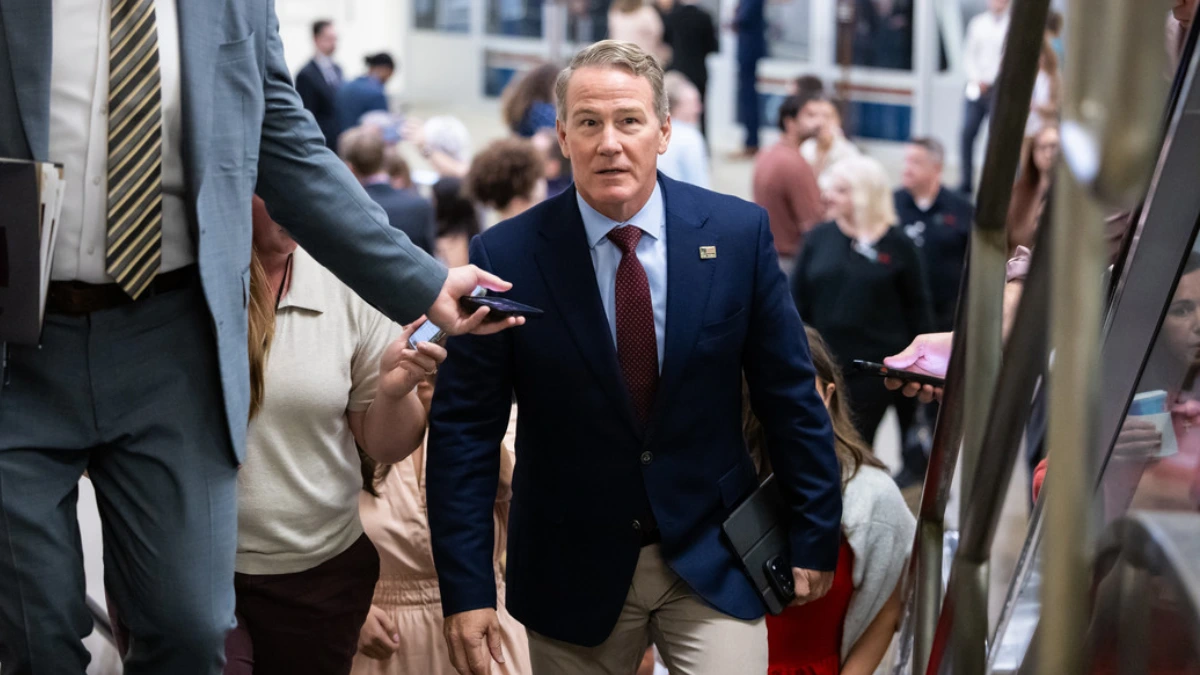
Sen. Jon Husted, Republican of Ohio, attempted to move the Ratepayer Protection Act through the Senate using unanimous consent, a procedure that can speed up consideration of legislation but allows any single senator to object.
Heinrich, the top Democrat on the Senate Energy and Natural Resources Committee, objected to the request.
Heinrich said he agrees with the broader principle that data centers should not leave families and small businesses responsible for infrastructure costs generated by large technology companies. However, he argued that the House-approved measure does not go far enough because it largely asks states to consider establishing protections rather than creating a mandatory federal requirement.
“The Ratepayer Protection Act falls short of what we need to do to respond,” Heinrich said on the Senate floor, according to CBS News.
His position is that federal legislation should require large electricity users to cover the costs of the grid infrastructure necessary to connect their facilities.
What the Ratepayer Protection Act Would Do
The House-passed bill was introduced by Rep. Gabe Evans, Republican of Colorado, and was also championed in the Senate by Husted.
Under the legislation, state utility regulators would be required to consider standards addressing the infrastructure costs associated with large electricity customers. Data centers can require substantial new investments in generation, transmission lines, substations and other electricity infrastructure.
The goal is to prevent those costs from being automatically passed to ordinary electricity customers through higher utility rates.
The House approved the bill by a 417-3 vote, demonstrating broad bipartisan support in the chamber.
However, the bill does not require every state to adopt a specific rate structure. Instead, it establishes a process for state regulators to consider standards concerning large-load customers.
That distinction became central to Thursday’s Senate disagreement.
Heinrich Pushes the GRID Savings Act
After objecting to Husted’s bill, Heinrich attempted to advance his own proposal, the GRID Savings Act.
The legislation would require large electricity users, including major data centers and other large-load customers, to pay for grid infrastructure required to connect their facilities.
Heinrich’s office said the proposal is intended to replace voluntary commitments with enforceable requirements for companies building facilities that create substantial new electricity demand.
The senator also argued that data center policy should address issues beyond electricity costs, including water consumption, local community involvement and air pollution.
His proposal would establish requirements for large electricity customers connecting to the grid and would give companies a framework for financing necessary upgrades.
Republicans Object to Heinrich’s Alternative
Heinrich’s attempt to advance his legislation was also unsuccessful.
Republican Sen. Bernie Moreno of Ohio objected to the request to move the GRID Savings Act forward.
That created a procedural stalemate: Republicans sought to advance the House-passed Ratepayer Protection Act, while Heinrich sought consideration of his alternative legislation.
CBS News reported that Moreno criticized Heinrich for blocking the House bill, arguing that the legislation could have provided an immediate response to concerns about electricity costs.
The competing objections mean neither proposal advanced through the Senate during Thursday’s proceedings.
Why Data Center Energy Costs Are Becoming a Bigger Issue
The dispute comes as data centers are expanding rapidly across the United States.
The growth is closely connected to increasing demand for artificial intelligence services, cloud computing and other digital technologies. Large data centers can consume enormous quantities of electricity, creating new demands for power generation and transmission infrastructure.
The International Energy Agency has estimated that U.S. data center electricity consumption could more than double from 2024 levels by the end of the decade. Other estimates have suggested data centers could account for more than 10% of U.S. electricity demand by 2030.
As companies seek locations with sufficient electricity supplies, communities and policymakers are increasingly examining who should pay for the infrastructure needed to support new facilities.
The issue is particularly significant in areas where utilities need to expand generation capacity, transmission networks or distribution systems before a large data center can begin operations.
Two Different Approaches to Ratepayer Protection
The Senate disagreement reflects two different legislative approaches.
The Husted-backed Ratepayer Protection Act would have states consider standards designed to ensure that large electricity customers pay costs associated with new infrastructure.
Heinrich’s GRID Savings Act takes a more direct approach by requiring large-load customers to finance the facilities needed to connect them to the grid.
Heinrich has previously argued that voluntary agreements between technology companies and utilities are not sufficient protection for consumers. His office said his proposal would establish mandatory requirements for large electricity users.
The difference is therefore not simply about whether data centers should contribute to infrastructure costs. Both lawmakers have stated that large electricity users should bear costs associated with the infrastructure they require. The disagreement centers on how strong and enforceable federal requirements should be.
AI Expansion Adds Pressure to the Debate
The controversy comes as policymakers grapple with the infrastructure demands created by the rapid expansion of artificial intelligence.
Technology companies are investing heavily in data centers designed to support AI models, cloud services and other computational workloads. Those facilities require electricity around the clock, making access to reliable power an important factor in where companies build.
Federal lawmakers are consequently facing questions about how to encourage technology investment while protecting electricity customers from potentially higher infrastructure costs.
The House’s bipartisan vote demonstrated that lawmakers from both parties are paying attention to the issue. However, the Senate’s competing proposals show that there is still disagreement over the appropriate federal response.
What Happens Next?
For now, neither the Ratepayer Protection Act nor Heinrich’s GRID Savings Act has cleared the Senate.
Senate Majority Leader John Thune indicated that the chamber could potentially revisit the issue depending on its broader legislative schedule and other energy-related negotiations.
The debate is likely to continue as lawmakers consider the economic and infrastructure consequences of continued data center expansion.
The central question remains how the United States can accommodate growing electricity demand from AI and data centers while determining which costs should be paid by technology companies and which, if any, should be borne by other electricity customers.
For consumers, utilities and technology companies, the outcome could have significant implications for how future data center projects are financed and connected to the nation’s electric grid.
Bottom Line
The Senate’s latest action leaves federal data center energy legislation unresolved. The House-backed Ratepayer Protection Act has broad bipartisan support in the House but faces objections in the Senate, while Heinrich’s alternative GRID Savings Act also failed to advance after a Republican objection.
With AI-related electricity demand continuing to grow, the dispute places a major policy question before Congress: how should the costs of expanding the electric grid to serve America’s growing data center industry be allocated?
Source: cbsnews