
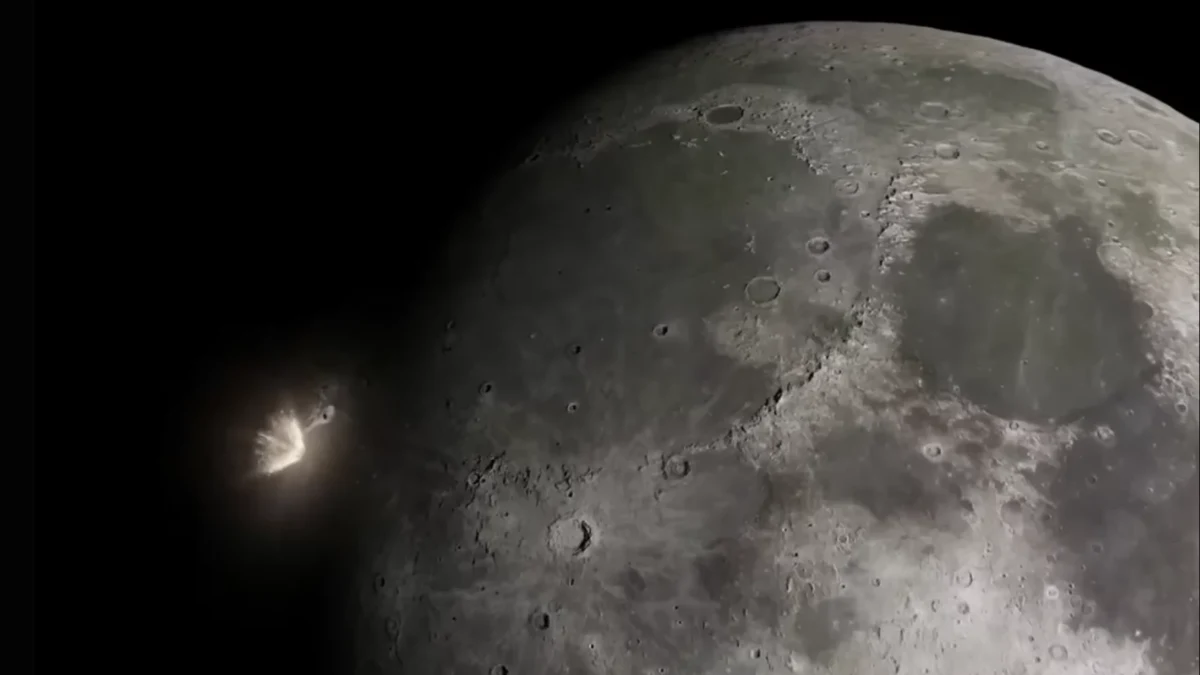
The spacex rocket moon crash has drawn attention to the growing problem of human-made debris in space. A piece of a SpaceX Falcon 9 rocket crashed into the Moon after spending months traveling through space, creating a fresh impact site and raising questions about how rocket stages should be managed during future lunar missions.
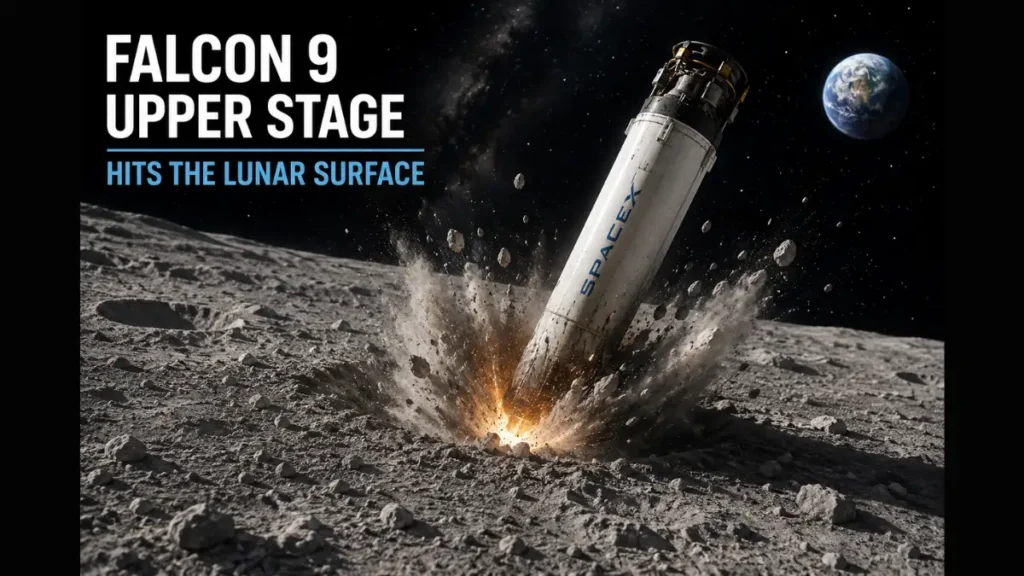
Falcon 9 Upper Stage Hits the Lunar Surface
The object was the spent upper stage of a Falcon 9 rocket that launched lunar missions in January 2025. After completing its original job, the rocket stage remained in space and eventually moved onto a trajectory that brought it into contact with the Moon.
The impact occurred near the Einstein Crater on the western side of the Moon. Scientists estimate that the object was traveling at about 5,400 mph, or 8,700 kilometers per hour, when it struck the surface. Before the collision, researchers predicted that the impact could create a crater roughly 20 to 27 meters wide.
South Korean Spacecraft Captures the Impact Site
Although no spacecraft captured the actual moment of the collision, scientists were able to study its effects. South Korea’s Danuri lunar orbiter observed the area before and after the impact and captured images showing changes to the lunar surface.
Researchers also detected material thrown into space by the collision. Observations from the European Southern Observatory’s Very Large Telescope in Chile identified sodium and lithium in the material associated with the impact. NASA is also expected to conduct additional observations using its Lunar Reconnaissance Orbiter.
Why the Crash Matters for Future Moon Missions
The collision did not threaten astronauts or spacecraft currently operating around the Moon. However, scientists say the event is an important warning as lunar exploration becomes more active.
More rockets, landers and spacecraft are expected to travel through the region between Earth and the Moon in the coming years. That means abandoned rocket stages and other debris could become a bigger problem for future missions.
The Moon has already experienced impacts from human-made objects, but the growing number of missions makes tracking and managing space debris increasingly important. Future lunar bases and crewed missions will need to account for both natural meteoroids and human-made objects.
The SpaceX rocket moon crash therefore serves as a reminder that a mission does not necessarily end when a rocket completes its primary task. As activity around the Moon increases, controlling where spacecraft and rocket stages ultimately go could become an important part of keeping future lunar operations safe.
Follow us for Business & Finance