
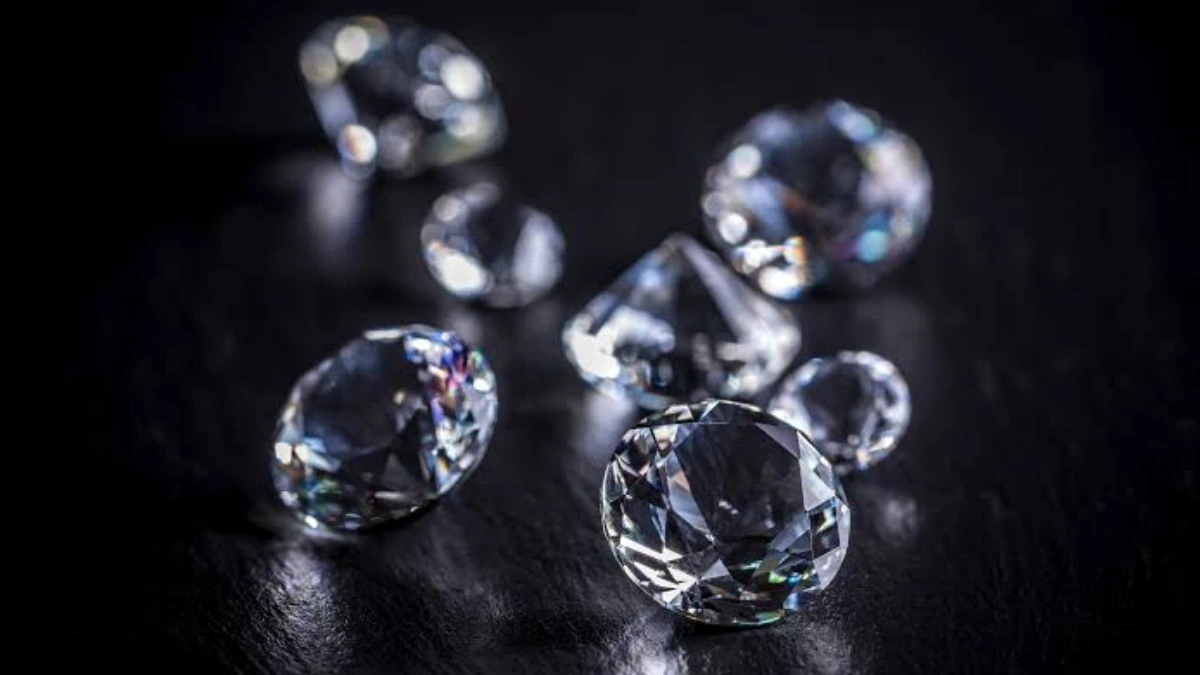
Scientists have made a surprising discovery that could change how diamonds are viewed in the world of electronics: ultrathin diamond membranes can generate electricity when they are mechanically deformed.
Researchers at the University of Hong Kong found that highly flexible, ultrathin polycrystalline diamond membranes exhibit a strong and repeatable piezoelectric response. The finding challenges more than a century of conventional scientific thinking that diamond could not produce an electrical voltage through mechanical deformation.
A New Electrical Property of Diamond
Diamond has long been known for its exceptional hardness, strength, chemical stability and thermal conductivity. However, since the early 1900s, it has generally been classified as a non-piezoelectric material.
Piezoelectric materials can produce an electrical voltage when they are subjected to mechanical stress. Until now, diamond was not considered capable of exhibiting this behavior in a useful way.
The Hong Kong research team, led by Professor Zhiqin Chu and Professor Yuan Lin, investigated whether the material might behave differently when produced in an extremely thin and flexible form.
Turning Rigid Diamond Into a Flexible Membrane
The researchers used an edge exfoliation technique to create an ultrathin polycrystalline diamond membrane. Reducing diamond to such a thin structure allowed it to bend considerably more than conventional bulk diamond.
When the researchers mechanically flexed the membrane, they detected stable voltage signals. They then conducted repeated mechanical cycling experiments under controlled conditions to verify that the electrical response was genuine and not caused by environmental interference or triboelectric effects.
The voltage response remained consistent, providing evidence that the diamond membrane itself was producing the electrical signal.
Grain Boundaries May Hold the Key
The researchers used first-principles calculations to investigate why the unexpected effect occurs.
Their analysis indicates that the electrical behavior is connected to grain boundaries within the polycrystalline diamond. These boundaries separate the numerous tiny diamond crystals that make up the membrane.
When the membrane bends, electrical charge polarization develops around these grain boundaries. This creates a difference in electrical potential between the two surfaces of the membrane, resulting in the observed voltage.
Potential Applications
The discovery could eventually give diamond a new role in advanced electronics. Instead of functioning only as a durable structural material, ultrathin diamond could potentially convert mechanical movement into electrical signals.
Researchers say possible applications include highly durable sensors capable of detecting bending or deformation. The material’s chemical stability and biocompatibility could also make it attractive for certain medical technologies, including implantable devices that could potentially generate small amounts of power or monitor mechanical changes.
The technology could also contribute to future micro-energy systems and self-powered sensors, particularly in applications where conventional batteries are difficult to replace or maintain.
The findings were published in Science Advances in a study titled “Uncovering piezoelectric effect in polycrystalline diamond membranes.”
The discovery does not mean ordinary gemstones can simply be used as household power sources. Instead, it demonstrates an unusual electrical property in specially engineered, ultrathin diamond membranes a development that could open new possibilities for diamond-based sensing and micro-energy technologies.
Source: sciencedaily